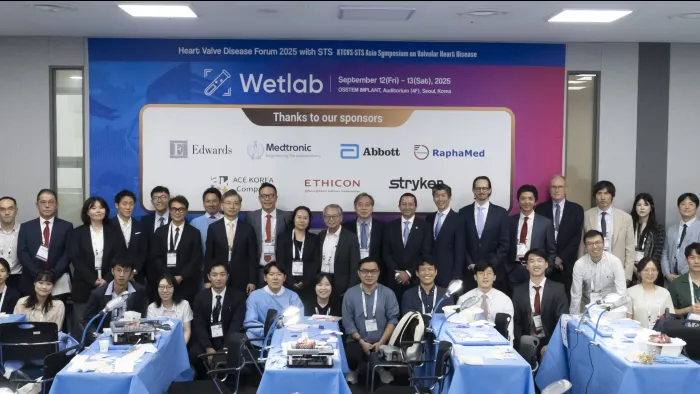
More than 300 attendees from around the world gathered in Seoul, Korea, on September 12–13 for the 2025 Heart Valve Disease Forum (HVDF), which was co-hosted by The Society of Thoracic Surgeons and the Korean Society for Thoracic and Cardiovascular Surgery (KTCVS). This year’s forum, centered on the theme “The Wonderland of the Tricuspid Valve: Unraveling Its Secrets,” offered an in-depth exploration of tricuspid valve disease, from anatomical foundations to advanced treatment strategies.
Image
The immersive, two-day event featured leading faculty from around the world and provided a multidisciplinary platform to examine the latest trends in diagnosis, surgical innovation, and clinical management of tricuspid valve pathology.
“This year’s HVDF covered the latest insights into the anatomic and physiologic basics, causes, diagnosis, treatment, and future of valve diseases, featuring scholars from various fields,” said HVDF President Kyung Hwan Kim, MD, PhD. “We facilitated discussion among experts, covering everything from foundational concepts to the latest trends in tricuspid valve research, including emerging surgical and treatment methods.”
Expert-Led Training and Hands-On Education
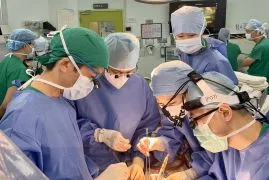
The program featured a comprehensive series of sessions, including mentorship programs, abstract presentations, poster sessions, and scientific debates, designed to foster both technical skill development and collaborative exchange. Hands-on wet labs allowed participants to practice complex procedures under expert guidance, while breakout discussions provided tailored instruction on topics such as tricuspid valve repair and the management of regurgitation in patients with atrial fibrillation.
“This year, we highlighted a particularly relevant topic: managing tricuspid valve disease in the setting of atrial fibrillation,” said Christopher Malaisrie, MD, of Northwestern Medicine. “The conference reflected growing global interest in the valve’s complexity and clinical significance.”
Advancing the International Dialogue on Valve Disease
Image
By combining practical skill-building with high-level academic dialogue, the HVDF continues to raise the bar for heart valve education. The English-language conference emphasized the importance of cross-cultural collaboration in tackling complex cardiothoracic challenges and provided a space for participants to engage directly with international experts.
With its emphasis on personalized mentorship, state-of-the-art content, and a focus on clinical translation, the 2025 HVDF reinforced its position as a premier global platform for advancing the science and practice of heart valve disease treatment.
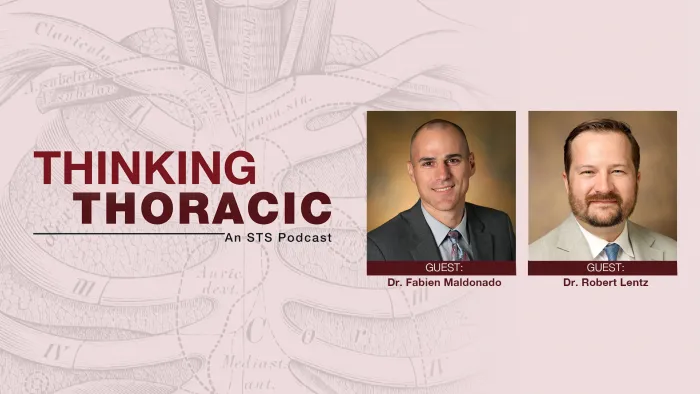
This latest episode of Thinking Thoracic, an STS podcast, features host Erin Gillaspie, MD, in conversation with Jonathan Spicer, MD, a leading thoracic oncologist and clinical trial investigator. The two dive into the landmark CheckMate 816 trial, which helped usher in a new era for immunotherapy in lung cancer treatment. Dr. Spicer shares insights on trial design, clinical outcomes, and what these findings mean for the future of thoracic surgery and oncology. Listen today.
You’ve finished the marathon of training, landed your first job, and now you’re standing at the operating room door, about to start building your career. The patient is on the table, the team is looking at you, and you start to have doubts: “Should I be doing this case open?” It’s a deceptively simple question, but in your early years, the answer can shape your reputation for a long time to come.
Don’t miss the latest Thinking Thoracic episode as host Erin Gillaspie, MD, is joined by Stephanie Worrell, MD, associate professor, University of Arizona, and thoracic surgeon, Banner Health, for a lively and insightful post-ASCO discussion. Together, they unpack the significance of the CheckMate 577 and Matterhorn trials, and explore what these groundbreaking studies mean for the future of esophageal and gastroesophageal junction cancer care.
Transcatheter aortic valve implantation (TAVI) has dramatically changed the landscape of care for patients with severe aortic stenosis (AS), evolving from a palliative option for those deemed inoperable to a widely accepted alternative to surgical aortic valve replacement (SAVR) in high-risk groups.
7 min read
Mateo Marin-Cuartas, MD, Leipzig Heart Center in Germany
In this episode of Thinking Thoracic, hear from Christopher Seder, MD, professor of surgery and chief of the thoracic surgery division at Rush University, and Robert Habib, vice president of research and analytics at STS, about the development of the Society’s short-term risk calculators for pulmonary resection and esophagectomy, powered by the General Thoracic Surgery Database with more than 800,000 pat
The 2025 STS Coronary Conference was held from June 12–14 in Chicago, bringing together more than 200 healthcare specialists from around the world. This three-day event was delivered groundbreaking insights and hands-on training for professionals involved in coronary surgery. “More and more, the concept of a coronary surgery specialist is emerging, and this conference supported that development by providing the education needed to acquire and validate the relevant skills and knowledge at each surgeon’s institution,” said co-course director Marc Ruel, MD, of the University of Ottawa Heart Institute.
Image
New for 2025, the Training Village offered attendees hands-on opportunities to build their skill set.
The conference featured a comprehensive program that focused on advanced surgical techniques, minimally invasive methods, and the latest technological innovations in the field. Attendees engaged with leaders in cardiothoracic surgery through lectures, panel discussions, and collaborative learning activities.
Each day included expert-led sessions covering a wide range of topics, including radial artery and BITA grafting, evidence-based practices, and technical pearls in coronary surgery. Participants also attended sessions on academic career development and minimally invasive, hybrid, and robotic CABG techniques. Highlights of the conference included keynote lectures, interactive case discussions, and surgical video presentations that allowed attendees to explore complex intraoperative and postoperative decision-making strategies in greater depth.
Image
Between sessions, attendees explored poster presentations and visited industry exhibits.
A key feature of the event was the introduction of the Training Village, a non-CME, hands-on learning space that featured cutting-edge surgical simulations and demonstrations and allowed attendees to gain practical experience under expert guidance.
The Training VIllage was organized into three stations:
Anastomosis Masterclass, which focused on advanced anastomotic techniques
Flow Measurement & Quality Control, where attendees practiced using intraoperative assessment tools to improve graft outcomes; and
Atrial Fibrillation Treatment, which provided instruction on left atrial appendage clipping and intraoperative Maze procedures.
“The Training Village was a great example of the conference’s practical component—emphasizing ‘know-how’ and ‘how-to’ over abstract concepts or theory, if you will,” said Dr. Ruel.
Throughout the conference, attendees participated in a wide array of engaging sessions, such as "Mastering Coronary Surgery: Expert Techniques," "Making the Most of Your Conduits," and "Which Kind of Academic Surgeon Do You Want to Be?" These sessions focused on developing both technical skills and strategic thinking.
Image
Dr. Brittany Zwischenberger (left) and her father, Dr. Joseph Zwischenberger (right), both presented at the conference.
By the end of the conference, participants had expanded their clinical knowledge, honed their skills, and networked with peers and leaders in coronary surgery. “As both a moderator and presenter, I left feeling inspired by the exchange of ideas and the shared commitment to advancing progress in coronary surgery,” said Brittany Zwischenberger, MD, of Duke University.
Chicago, IL – June 12, 2025 – The Society of Thoracic Surgeons (STS) has launched a new mobile app that offers surgeons and multidisciplinary medical providers real-time access to its suite of adult cardiac surgery and thoracic surgery risk calculators. Designed to enhance physician-patient decision-making and improve patient outcomes, the STS Risk Calculator App is now available for both iOS and Android devices.
CHICAGO (June 4, 2025) — A new study published in The Annals of Thoracic Surgery, a journal from The Society of Thoracic Surgeons, finds that Medicare patients with atrial fibrillation (AF) who undergo surgical ablation during isolated coronary artery bypass grafting (CABG) live longer than those who do not, offering compelling support for clinical guidelines that recommend this procedure but are too often not followed in practice.
CHICAGO, April 28, 2025 — The Society of Thoracic Surgeons (STS) today announced the launch of its latest surgical risk calculator designed for patients undergoing ascending aorta and aortic root surgery, with or without concomitant aortic valve replacement (AVR). This first-of-its-kind tool represents a major step forward in risk stratification and personalized surgical planning for complex aortic operations.
Thinking Thoracic Co-host Dr. Erin Gillaspie talks with Dr. Stephen Liu, associate professor of medicine at Georgetown University and head of Developmental Therapeutics at the Georgetown Lombardi Comprehensive Cancer Center, about the surgeon's role in navigating the biomarker space and working collaboratively with oncology colleagues. Listen today.