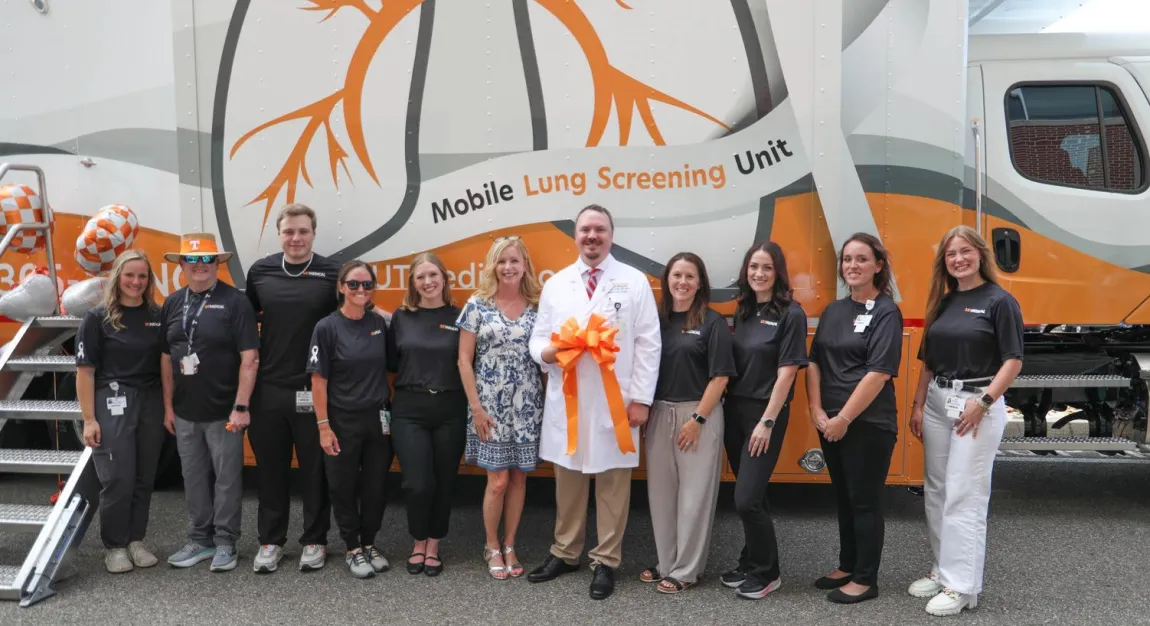
For Sean Jordan, MD, the need was clear: Too many patients across East Tennessee faced significant barriers to lung cancer screening—not because they lacked the need for screening, but because they lacked access to it.
East Tennessee has some of the highest smoking and lung cancer rates in the country, while screening rates remain below national averages. For patients in rural Appalachian communities, mountain roads, long travel distances, limited specialty care, and a lack of CT scanners in many counties can make screening especially difficult.
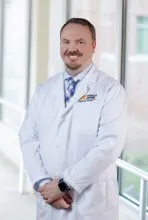
Jordan, chief of thoracic surgery and director of lung cancer screening at the University of Tennessee Medical Center (UTMC), saw an opportunity to bring screening directly to the communities that needed it most.
The result is a 45-foot mobile CT lung cancer screening unit designed to serve patients across 21 counties in East Tennessee.
“We needed something that could navigate our geography and be convenient and inviting for patients,” Jordan said.
Making the Mobile Unit a Reality
Bringing the vision to reality required more than clinical expertise. It required funding, collaboration, persistence, and advocacy.
The University of Tennessee Medical Center already had a robust lung cancer screening program, but funding a mobile program presented a significant challenge. Working with Congressman Tim Burchett, the team secured $2.3 million through the U.S. Department of Agriculture to fund the mobile unit and supporting software.
The team then pursued a competitive Rural Health Resiliency grant through the Tennessee Department of Health to support program personnel. STS Advocacy strengthened the application by providing a letter of support from then-STS President Dr. Jenna Romano.
The effort ultimately resulted in a $5.45 million grant—one of the largest awarded in the state—to support personnel for the mobile lung cancer screening program and a mobile mammography program.
Jordan also credits Rob Headrick, MD, chief of thoracic surgery at CommonSpirit-Memorial Hospital-Rees Skillern Cancer Institute-Chattanooga and chair of the STS Workforce on Health Policy, Reform, and Advocacy, with providing guidance and connecting the team with STS Advocacy resources.
Bringing Screening to Patients
The mobile unit will bring CT screening and a multidisciplinary team—including technologists, nurses, patient liaisons, and behavioral health professionals—directly into underserved communities.
“Many patients are not willing to travel outside their communities to seek even basic care,” Jordan said. “We can bring our medical expertise and the CT scanner itself directly to their communities.”
The program will also provide tobacco cessation services, education, and centralized coordination to help patients who need additional care move through the health care system more quickly.
Ultimately, success will be measured by whether more cases of lung cancer are detected at an earlier, more treatable stage.
A medical oncologist once told him that fewer patients seemed to be arriving with stage II and III lung cancer. “That to me is the biggest win I can think of for this community,” Jordan said. “We are shifting the stage of lung cancer earlier to when it is most survivable.”
Leading Through Advocacy
The project took two years to move from funding to implementation, but Jordan hopes its impact extends beyond East Tennessee.
“Reaching out to other mobile lung programs and STS Advocacy can introduce you to a community of like-minded groups” who can share their experiences and help develop programs that work for individual communities, he said.
The experience reinforced Jordan's belief that thoracic surgeons should play a leading role in strengthening screening programs nationwide.
“Apart from patients and families, no one in the hospital sees the benefits of a robust lung cancer screening program as much as thoracic surgeons,” he said. “We should be leaders and advocates for strengthening our own programs and all programs nationwide.”