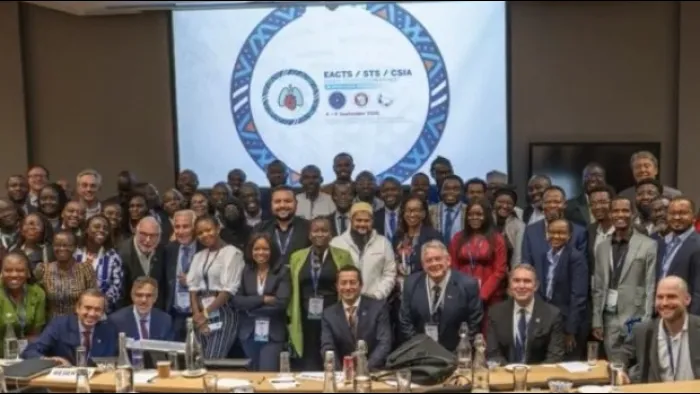
The Society of Thoracic Surgeons participated in its first-ever meeting in Africa as a co-organizer of the inaugural EACTS/STS/CSIA Cardio-Thoracic Conference, held Sept. 4-6 at the University of Cape Town Academic Conference Centre in Cape Town, South Africa.
Organized by the European Association for Cardio-Thoracic Surgery (EACTS), The Society of Thoracic Surgeons (STS), and the Cardiac Surgery Intersociety Alliance (CSIA), in association with the Society of Cardiothoracic Surgeons of South Africa, the conference brought together cardiothoracic surgeons, health care leaders, trainees, and other professionals from across Africa and around the world. Held under the theme "In Africa for Africa," the meeting focused on advancing clinical education while strengthening cardiothoracic care across the continent.
The three-day program featured presentations, panel discussions, and hands-on simulation covering coronary, aortic, valvular, thoracic, congenital, and pediatric surgery. Sessions also addressed perioperative care, quality improvement, clinical databases and registries, and strategies to strengthen cardiothoracic programs across Africa through workforce development, training, and infrastructure.
Participants explored approaches to sustainable program development and institutional partnerships, reflecting the CSIA mission of expanding access to cardiac surgery through collaboration and capacity building. An international faculty from Africa, North America, Europe, Asia, Australia, and South America fostered knowledge exchange and new opportunities for collaboration.
Organizers envision the conference as the first in a series of events across Africa aimed at advancing education, partnership, and cardiothoracic care throughout the region. The meeting marked an important milestone in STS's efforts to support international collaboration and sustainable growth in cardiothoracic surgery worldwide.
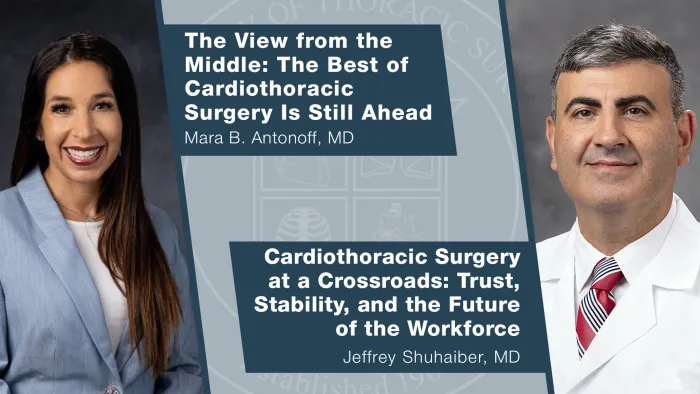
These blogs, Cardiothoracic Surgery at a Crossroads and The Best of Cardiothoracic Surgery Is Still Ahead, offer two perspectives on the future of the specialty.
Entering into the STS Leadership Institute, I had two main goals:build relationships with other surgeons that share common leadership interests and hone a broad skill set that can be used in future leadership positions.
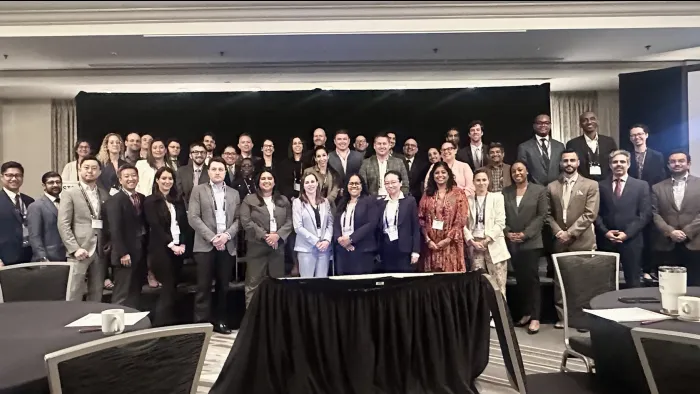
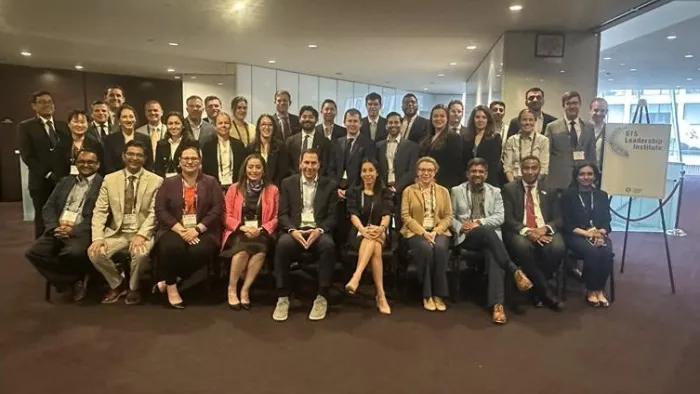
On April 24, 2026, the STS Leadership Institute convened in Chicago for its second session in a five-part leadership development series. Held at the Fairmont Chicago, the one-day program brought together more than 40 participants, six task force surgeons, and five faculty members to explore team dynamics, personal growth, and leadership effectiveness. The event began with a welcome reception the evening prior, fostering early connections among attendees.
The Leading Others session focused on core leadership competencies, including leading diverse teams, managing conflict, evaluating performance, and cultivating a culture of wellness—skills essential for cardiothoracic surgeons navigating increasingly complex clinical and organizational environments.
Interactive Learning and Practical Leadership Strategies
The program opened with remarks from STS President Vinay Badhwar, MD, and course director Mara B. Antonoff, MD, who emphasized the importance of continuous leadership development. Early sessions, led by Dr. Antonoff and Ram Kumar Subramanyan, MD, PhD, examined how individual growth strengthens team leadership.
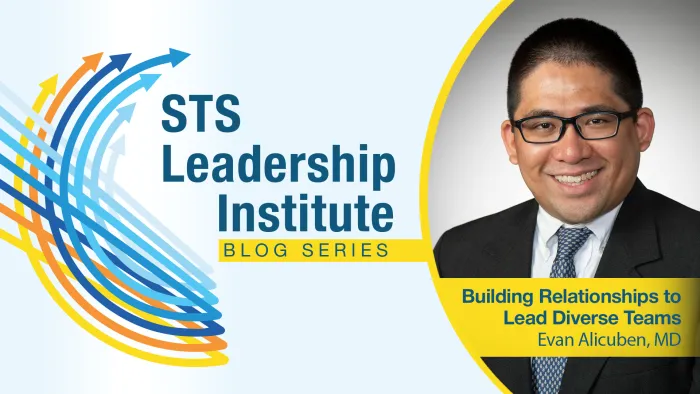
Attendees engaged in interactive case scenarios and small-group discussions, with a focus on evaluating early-career colleagues—an increasingly important skill as participants step into leadership roles. “Programs like this reinforce that leadership is a skill we have to continually refine,” said Leadership Institute participant Evan Alicuben, MD. “The combination of self-reflection and practical application made it relevant to how we lead our teams every day.”
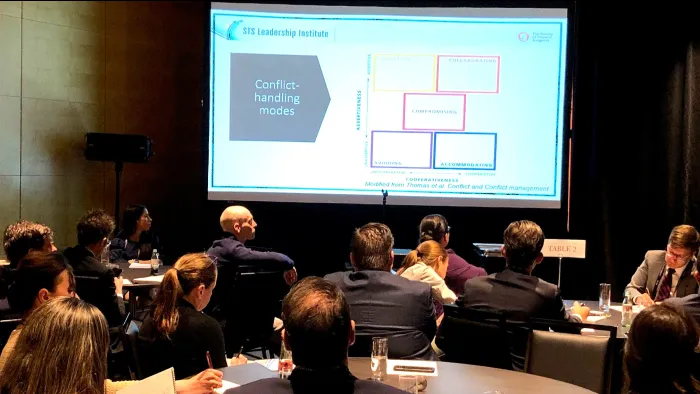
Afternoon sessions continued with case-based discussions on conflict management, drawing on the “Five Dysfunctions of a Team” framework. Participants worked in table groups to analyze interpersonal dynamics and develop actionable strategies. “The case-based format and small-group discussions really brought the concepts to life,” said Leadership Institute participant Kyla Joubert, MD. “We were able to work through real scenarios and leave with strategies we can apply right away in our own institutions.” A session on fostering a culture of wellness, led by Melanie A. Edwards, MD, reinforced the role of leadership in supporting team well-being and resilience.
Throughout the day, the emphasis on case scenarios and small-group dialogue created an engaging environment for exchanging perspectives and applying concepts in practice.
Looking ahead, the STS Leadership Institute will continue its curriculum with additional sessions leading to a capstone at the 2027 STS Annual Meeting in San Diego, creating an ongoing development experience to help participants lead effectively in a rapidly evolving healthcare landscape.
The Society of Thoracic Surgeons today announced the 2026 Nina Starr Braunwald Extraordinary Women in Cardiothoracic Surgery Award recipients at its 62nd Annual Meeting in New Orleans. Now in its fourth year, the award is co-sponsored by STS and Women in Thoracic Surgery (WTS) and recognizes women cardiothoracic surgeons who exemplify exceptional clinical expertise, leadership, and dedication to advancing the field.
This year’s honorees are Emily Farkas, MD; Carolyn Jones, MD; and Rosemary Kelly, MD.
Image
2026 Nina Starr Braunwald Extraordinary Women in CT Surgery Award recipients (l to r) Dr. Emily Farkas, Dr. Rosemary Kelly, and Dr. Carolyn Jones.
“We are proud to honor these outstanding women and celebrate their accomplishments as surgeons, leaders, and mentors,” said STS Immediate Past President Jennifer C. Romano, MD, MS. “Their dedication and example motivate and guide the next generation of cardiothoracic surgeons—women and men alike—to push the boundaries of innovation in their specialties.”
Meet these these accomplished surgeons:
Dr. Emily Farkas, a cardiothoracic surgeon whose career is defined by an unwavering commitment to patient care and global service. One of the approximately 3% of cardiac surgeons who are women, she also holds the distinction of being the first woman accepted into cardiothoracic surgery training at Yale University. After completing her training, she spent five years on the faculty at Saint Louis University as an assistant professor of surgery.
A passion for global medicine has shaped Dr. Farkas’s career from its earliest days, including delivering her first baby in Kenya and completing medical school electives in Sri Lanka. This commitment ultimately led her to step away from a traditional academic path to focus on humanitarian cardiac surgery. Through partnerships with various charitable organizations, she has directed or participated in more than 50 surgical missions worldwide, providing free, life-saving heart surgery in countries including Brazil, Ghana, Nepal, Mongolia, Myanmar, Nigeria, and Vietnam.
Dr. Farkas is an associate professor of surgery and associate director of global health in surgery at Indiana University School of Medicine, as well as chief of cardiac surgery at the Richard L. Roudebush VA Medical Center in Indianapolis. A recognized leader in the field, she serves on numerous STS and WTS committees, an associate editor for CTSNet, and holds leadership roles with CardioStart International, EMERGENCY USA, and the Cardiac Surgery Intersociety Alliance. Her career reflects a powerful blend of surgical excellence, service, and advocacy for equitable access to care.
Dr. Carolyn Jones' journey to leadership in cardiothoracic surgery is marked by resilience, compassion, and a lasting commitment to education and mentorship. She began her medical career as a nurse and went on to complete medical school at George Washington University while raising a family as a single mother. She trained in general and cardiothoracic surgery at the University of Rochester, where she later became the first woman hired as an attending cardiothoracic surgeon and now serves as chief of thoracic surgery.
An associate professor of surgery and chief of thoracic and foregut surgery at the University of Rochester Medical Center, Dr. Jones is widely admired for her clinical excellence, technical skill, and ability to work well with others. While she may not seek national recognition, her impact is deeply felt by patients, trainees, nurses, and colleagues throughout upstate New York. Known for her empathy, bedside manner, and dedication to patient-centered care, she has received numerous teaching and service awards over the course of her career.
Dr. Jones has played a vital role in surgical education, serving as associate residency program director and enhancing curricula and training experiences for residents and medical students. Later in her career, she adopted minimally invasive and robotic techniques to further improve patient outcomes, building strong, collaborative teams in the process. A steadfast mentor and role model, Dr. Jones exemplifies leadership grounded in service, respect, and inclusion, creating environments where patients and trainees alike feel valued and supported.
Dr. Rosemary Kelly, a nationally recognized leader whose career has advanced cardiothoracic surgery while opening doors for women and underrepresented groups across the specialty. She is professor of surgery at the University of Minnesota Medical School, executive vice chair for cardiovascular and thoracic surgery, chief of the heart and vascular service line at MHealth Fairview, and program director of the cardiovascular and thoracic surgery fellowship program. She also holds the C. Walton and Richard C. Lillehei Professorship in Cardiothoracic Surgery.
A dedicated mentor, Dr. Kelly supports trainees and junior faculty through formal programs and personal sponsorship, offering practical guidance on career development and work-life integration. Her research portfolio, supported by the NIH, VA, and other major agencies, includes more than 140 peer-reviewed publications spanning clinical innovation, as well as scholarship on mentorship and resilience in surgery. Clinically, she combines excellence with service, having led major cardiothoracic and transplant programs and delivered distinguished lectures at institutions dedicated to advancing women in medicine.
“Each of these women are shaping the future of cardiothoracic surgery,” said Mara Antonoff, MD, president of Women in Thoracic Surgery, “Their expertise, leadership, and dedication are driving progress in our field and opening doors for the women who will follow.”
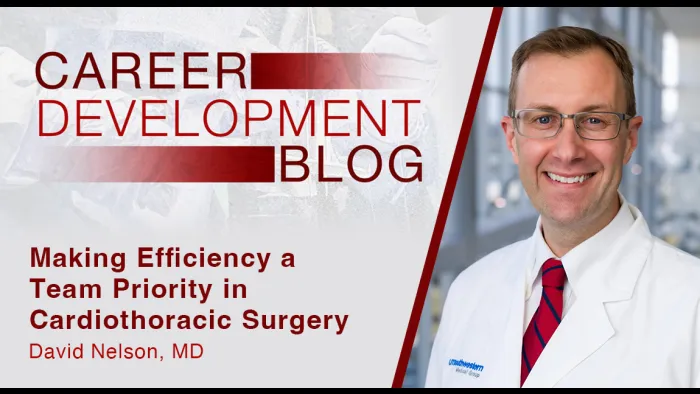
Efficiency can be misunderstood as simply working faster. In reality, true efficiency in the operating room is about making every movement count, communicating clearly so that needs are understood, understanding the needs of the team, and simplifying the system. Efficiency is a collective achievement—one that the surgeon is uniquely positioned to lead, and it requires a coordinated, high-performing team.
Conflict is inevitable in the high-pressure, high-stakes world of cardiothoracic surgery. Whether it's a difference in opinion during an operation, tension between surgical team members, or friction over program outcomes, the ability to manage conflict effectively is a critical—yet often underdeveloped—skill for surgeons at all stages of their careers.
On April 4, 2025, the STS Leadership Institute hosted a one-day session on “Leading Others” as part of its comprehensive program. This workshop focused on conflict management, leading diverse teams, and addressing both implicit and explicit biases. More than 30 early- and mid-career cardiothoracic surgeons attended, gaining valuable insights into these critical areas.
Additionally, the session highlighted the importance of fostering a culture of wellness within medical teams. These leadership skills are vital for cardiothoracic surgeons in both academic and private practice settings, where strong leadership is key to achieving team success.
The STS Leadership Institute offers a comprehensive leadership program that includes five sessions—three virtual and two in-person—and aims to enhance participants' leadership skills in a constantly evolving healthcare landscape. Attendees benefit from numerous opportunities to engage with a distinguished faculty of expert leaders, receiving valuable insights and guidance throughout their development.
Interactive Discussions and Expert Insights on Leadership and Team Dynamics
Image
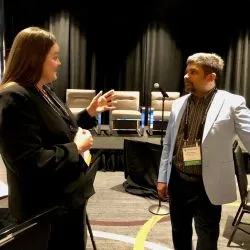
Dr. Meghan Halub (left) speaks with course co-director Dr. Ram Kumar Subramanyan (right) between presentations.
During “Leading Others,” participants heard from course directors Mara Antonoff, MD, and Ram Kumar Subramanyan, MD, who shared valuable insights on how personal growth contributes to effective team leadership. The sessions included interactive case scenarios and table discussions focused on evaluating others and managing conflict. Guest speaker Minerva Romera Arenas, MD, addressed the challenges of leading diverse teams and confronting implicit bias. Participants explored case examples to deepen their understanding and apply the concepts discussed.
"Today's sessions have been incredibly valuable, providing an opportunity to engage face-to-face in small discussion groups with peers from across the country," said participant Meghan Halub, MD. "I can see how the small table sessions will help me manage conflict and problem-solve challenging case scenarios as I transition from private practice to an academic medical center, while also preparing for the next step in my career."
Looking ahead, the Leadership Institute's virtual sessions will be held in July and October, culminating in the capstone event at STS 2026 in New Orleans next January.
Coming soon: Follow the stories of our four Leadership Institute participants as they share their experiences with the program in a new blog series posted on STS.org.
Congratulations—you’ve landed the leadership role you’ve been working toward. After months (or years) of strategic effort, your appointment is finalized and the path forward begins. Whether you're stepping into a new position or pioneering an inaugural role, this change is as much about vision and preparation as it is about execution.
The Society of Thoracic Surgeons today announced the 2025 Nina Starr Braunwald Extraordinary Women in Cardiothoracic Surgery Award recipients at its 61st Annual Meeting in Los Angeles. Now in its third year, the award is co-sponsored by STS and Women in Thoracic Surgery (WTS) and honors women cardiothoracic surgeons who have demonstrated exceptional clinical expertise and made significant contributions to the field.
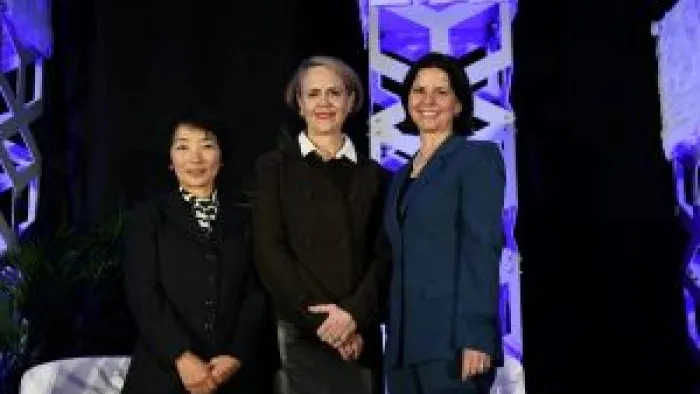
This year’s recipients are Jessica Donington, MD; Stephanie Fuller, MD; and Aya Saito, MD.
Image
2025 Nina Starr Braunwald Extraordinary Women in CT Surgery Award recipients (l to r) Dr. Ayo Saito, Dr. Jessica Donington, and Dr. Stephanie Fuller.
“It is our privilege to honor these exceptional women and celebrate their achievements as surgeons, leaders, and mentors,” said STS President Jennifer C. Romano, MD, MS. “They inspire and empower the next generation of cardiothoracic surgeons, both women and men, to reach new heights in their fields.”
Meet these exceptional women surgeons:
Dr. Jessica Donington, a thoracic surgeon specializing in benign and malignant chest diseases, is at the forefront of the fight against lung cancer. As professor of surgery and chief of thoracic surgery at UChicago Medicine and director of lung cancer screening at UChicago, she leads thoracic oncology research, focusing on early detection and innovative surgical approaches. Her groundbreaking clinical trials are transforming patient care by paving the way for earlier diagnosis and more effective treatments.
As an advocate for equitable access to screenings and life-saving treatments, particularly for underserved communities on Chicago’s South Side, Dr. Donington works tirelessly to ensure all individuals have the opportunity for timely intervention.
With a strong commitment to advancing the field, Dr. Donington has accepted leadership roles at prominent cardiothoracic surgery organizations. As a past president of Women in Thoracic Surgery, New York Society for Thoracic Surgery, and Western Thoracic Surgical Association, Dr. Donington has championed opportunities for future generations, especially women in the field. She is a member of the American Board of Thoracic Surgery and serves on the editorial boards of the Annals of Thoracic Surgery, Journal of Thoracic Oncology, and CHEST.
Dr. Donington is not only an accomplished surgeon and researcher but also a dedicated educator, earning numerous awards for her exceptional ability to inspire students, residents, and fellows, including the American Society of Clinical Oncology Excellence in Teaching Award and the Distinguished Leader in Program Innovation from the University of Chicago’s Biological Sciences Division. A sought-after speaker both locally and internationally, she continues to shape the future of thoracic surgery through her unwavering commitment to patient care, research, and education.
Several of Dr. Donington’s peers have noted that her influence will resonate for decades, underscoring her enduring impact on both the surgical community and her patients.
Dr. Stephanie Fuller serves as the Thomas L. Spray, MD, Endowed Chair in Pediatric Cardiothoracic Surgery at the Children’s Hospital of Philadelphia (CHOP), where she is known for her innovative approach to treating congenital heart conditions in both children and adults. Leading the Philadelphia Adult Congenital Heart Center, she passionately advocates for lifelong care for adult survivors, ensuring they receive continuity in care from doctors familiar with the unique aspects of pediatric cancer survivorship. Her roles at the University of Pennsylvania and Pennsylvania Hospital further underscore her dedication to patient care.
Dr. Fuller is a respected researcher who has significantly contributed to understanding neurodevelopmental outcomes and quality of life following heart surgery. Her research emphasizes the importance of addressing both the physical and emotional well-being of patients. She is considered a pioneer in pushing the boundaries of medical knowledge to advance a more holistic approach to cardiac care.
Beyond her clinical and research work, Dr. Fuller is a dedicated mentor, shaping the next generation of surgeons as program director for the Congenital Cardiothoracic Fellowship at CHOP. She instills in her trainees the same passion and dedication that characterize her own career. The success of her mentees, many of whom have assumed leadership positions, reflects her commitment to fostering an inclusive and supportive learning environment.
Dr. Fuller’s leadership extends to national and international levels through her role as an oral examiner for the American Board of Thoracic Surgery and her position as the 2025 Chair of the STS Annual Meeting Workforce. She is a strong advocate for gender equity in healthcare, promoting an inclusive environment where all can thrive.
Dr. Aya Saito, a cardiac surgeon, is recognized as one whose remarkable career has redefined the landscape of a traditionally male-dominated field. In 2023, she made history as the first female chairperson of the department of surgery at Yokohama City University Graduate School of Medicine, an achievement with far-reaching implications for Japanese and Asian medicine.
Dr. Saito’s impressive background includes training at Yokohama City University School of Medicine, a PhD in cryopreserved heart valves from the University of Tokyo, and a clinical fellowship in cardiothoracic surgery and heart transplantation at the University of Western Ontario Hospital. Specializing in adult cardiac surgery, she is recognized for her expertise in off-pump coronary artery bypass, valvular heart disease, and aortic surgery, providing exceptional and compassionate care, especially to high-risk elderly patients.
Beyond her clinical practice, Dr. Saito is a trailblazing researcher. Her pivotal work on cryopreserved allogeneic vascular tissues, published in the Journal of Thoracic and Cardiovascular Surgery, is highly regarded. She also spearheads the Japan Cardiovascular Surgery Database, which is influencing global clinical practices and raising standards in patient care.
Dr. Saito is deeply committed to mentorship and has founded Women in Thoracic Surgery in Japan, creating a supportive and empowering community for aspiring female surgeons. Dr. Saito’s colleagues emphasize that many of the achievements of women thoracic surgeons in Japan are directly attributable to her mentorship, highlighting her significant role in advancing and supporting women in the specialty — demonstrating that the future of medicine thrives when diverse voices are heard and valued.
“These exceptional women are essential voices in cardiothoracic surgery,” said Daniela Molena, MD, president of Women in Thoracic Surgery. “Each of them exemplifies the qualities needed to advance our specialty and inspire the next generation of women cardiothoracic surgery leaders.”
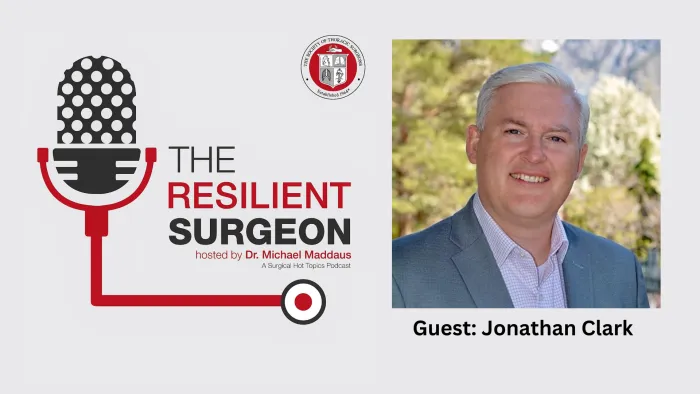
Host Dr. Michael Maddaus talks with Jonathan Clark, leadership scholar at UTSA and co-author of Leading Through: Activating the Soul, Heart, and Mindof Leadership, about prioritizing people, purpose and real productivity to transform an organization. Hear compelling stories that show how "the legacy model of leadership can be destructive," resulting in what he calls "organizational darkness." Learn about a positive model focused on caring for people and helping them thrive.