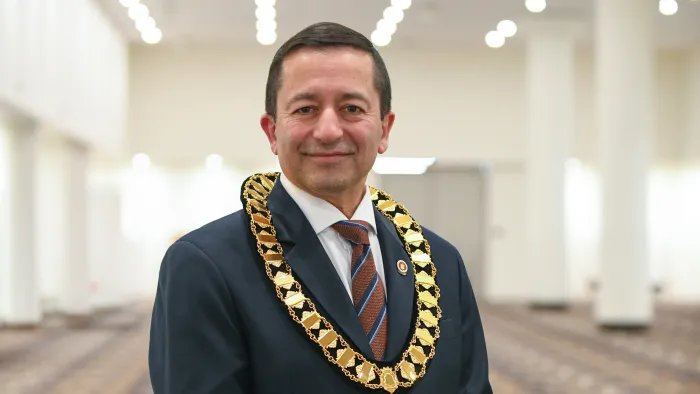
STS CEO and Executive Director Elaine Weiss, JD, has announced plans to retire. Weiss joined the Society of Thoracic Surgeons in 2019.
“Ms. Weiss has been a superb leader for STS, collaborating closely with surgeon leaders to advance the Society on multiple fronts over the past seven years,” STS President Vinay Badhwar said. “We have deeply valued her strategic contributions and management oversight.”
Badhwar added, “As the premier organization in the specialty, STS looks forward to identifying our next CEO to continue Ms. Weiss’s legacy as we build upon our innovation, operational excellence, and global impact.”
The STS has selected Immediate Past President Dr. Joseph Sabik, to lead the search committee. Additional search committee members are Drs. Vinay Badhwar, Vinod Thourani, Jessica Donington, Wilson Szeto, Jenna Romano, John Mitchell, David Cooke, Adil Husain, and Susan Moffatt-Bruce.
STS has retained Spencer Stuart to assist in the search.
President Trump has signed into law the bipartisan federal spending package that provides full‑year appropriations for the remaining three FY26 funding bills — Labor‑HHS‑Education and Related Agencies, Defense, Transportation‑HUD — and provides two weeks of stopgap funding for the Department of Homeland Security.
NEW ORLEANS—February 1, 2026— Ascending aortic hemiarch reconstruction offers the same long-term benefits to patients over age 65 with acute type A aortic dissection (ATAAD) as more complex extended arch reconstruction procedures, according to a study presented today at the 2026 Society of Thoracic Surgeons Annual Meeting.
Renowned surgeon-scientist to lead the specialty with a bold agenda centered on "Excellence, Evidence, Impact"
NEW ORLEANS —January 31, 2026 —The Society of Thoracic Surgeons (STS) today elected Vinay Badhwar, MD, as its 62nd President during the organization's Annual Meeting in New Orleans. Dr. Badhwar will guide the more than 8,000-member organization through a rapidly evolving health care landscape with a focus on technical excellence, data-driven science, and measurable impact for patients worldwide.
The Society of Thoracic Surgeons today announced Thomas E. MacGillivray, MD, as the recipient of the 2026 Distinguished Service Award in recognition of his extraordinary dedication to the field of cardiothoracic surgery and his longstanding service to STS at the Society’s 62nd Annual Meeting in New Orleans
Image
Dr. Thomas MacGillivray
Dr. MacGillivray is Physician Executive Director of Cardiac Surgery at MedStar Health and Chairman of Cardiac Surgery at MedStar Washington Hospital Center. He previously held senior leadership roles at Houston Methodist Hospital, including the Jimmy F. Howell, MD, Endowed Chair in Cardiovascular Surgery, Chief of Cardiac Surgery and Thoracic Transplant Surgery, and Associate Medical Director of the Cardiovascular ICU. Earlier, he spent 19 years at Massachusetts General Hospital as Surgical Director of the Adult Congenital Heart Disease Program, Co-Director of the Thoracic Aortic Center, and Surgical Director of the Mechanical Circulatory Support Program, while also serving as Associate Professor of Surgery at Harvard Medical School.
Across each of these leadership roles, Dr. MacGillivray has demonstrated an unwavering commitment to clinical excellence, innovation, and mentorship.
“Dr. Thomas MacGillivray embodies the highest standards of leadership, innovation, and dedication to the field of cardiothoracic surgery,” said STS President Joseph F. Sabik III, MD. “His unwavering commitment to advancing thoracic care and mentoring the next generation of surgeons has left an indelible mark on our Society and the specialty as a whole.”
Dr. MacGillivray is a board-certified cardiac and thoracic surgeon with more than 30 years of experience in both traditional open and minimally invasive techniques. His expertise spans coronary artery bypass, valve repair and replacement, thoracic aortic surgery, maze procedures, septal myectomy, cardiac tumor surgery, and adult congenital heart disease. He is committed to patient-centered care, following patients through their entire surgical journey from the OR to recovery.
His clinical and academic interests include aortic disease, adult congenital heart disease, heart failure, and pulmonary embolism. A strong advocate for quality improvement, he focuses on outcomes research and large clinical databases. He has authored more than 125 peer-reviewed articles and textbook chapters on aortic disease, adult congenital heart disease, mechanical circulatory support, and cardiac tumors.
Dr. MacGillivray earned his medical degree from Tufts University School of Medicine after completing undergraduate studies in Classical Studies at Tufts University. He completed his internship and general surgery residency at Massachusetts General Hospital, followed by an extensive and distinguished fellowship training pathway that included a research fellowship in fetal surgery at the University of California, San Francisco; congenital heart surgery training as Chief Resident at Boston Children’s Hospital; and adult cardiothoracic surgery training as Chief Resident at Massachusetts General Hospital.
Through decades of clinical excellence, academic contribution, and service-oriented leadership, Dr. MacGillivray has made a lasting impact on cardiothoracic surgery. The 2026 Distinguished Service Award recognizes not only his remarkable career, but also his enduring commitment to patients, colleagues, and the future of the specialty.
On Sunday, Feb. 1 at 10:45 a.m., during the “Advancing Lung Cancer Screening Implementation in Real World Settings” session, Dr. Elliot Servais of Lahey Hospital and Medical Center will present The Society of Thoracic Surgeons Expert Consensus on Surgical Quality Standards for Lung Cancer Screening Detected Nodules. As chair of the STS Task Force responsible for the consensus document, Dr. Servais will walk attendees through comprehensive, multidisciplinary recommendations designed to standardize perioperative care for CT lung cancer screening programs nationwide.
Image
Dr. Elliot Servais
Lung cancer screening with low-dose CT has proven effective in reducing disease-specific mortality, but wide variation in how programs manage screen-detected nodules persists. To address this, the STS convened a multidisciplinary panel to review the evidence and establish clear benchmarks for diagnostic evaluation, complication rates, and timeliness of intervention. Through a structured literature review and modified Delphi process, the panel produced 23 consensus statements focused on improving safety, consistency, and coordination in screening pathways.
Key recommendations include permitting surgery without a preoperative tissue diagnosis in select patients—preferably using minimally invasive, parenchymal-sparing techniques—and rejecting pneumonectomy without a diagnosis.
In his presentation, Dr. Servais will also highlight why certain targets, such as achieving a benign resection rate below 10%, may challenge some programs. “Meeting this benchmark requires consistent multidisciplinary review, judicious use of preoperative biopsy, and a willingness to follow equivocal lesions closely—approaches that can reduce unnecessary surgery and improve patient outcomes,” says Dr. Servais.
By integrating diverse clinical perspectives, programs can better determine when invasive intervention is warranted versus when surveillance is safest, improving decision-making and minimizing avoidable procedures.
“Thoracic surgeons must remain central to lung cancer screening programs, and adherence to strong perioperative quality standards—rooted in multidisciplinary evaluation, operative safety, and timely intervention—is critical to ensuring that lung cancer screening continues to save lives with minimal harm to patients,” adds Dr. Servais.
In today’s “2025 STS Compensation and Member Practice Survey Update” session, STS leaders discussed key findings from the 2025 survey, offering valuable insights into cardiothoracic surgeon compensation across specialties, career stages, and geographic regions.
This year’s survey—which remains the only tool capturing the full scope and nuances of cardiothoracic surgery practice—now delivers three years of trend data and insights and includes responses from more than 1,100 surgeons. It highlights key trends, including a 5% increase in compensation for cardiac surgeons, 7% for congenital surgeons, and 11% for hybrid surgeons compared with 2024. The survey also expands questions about non-financial considerations accepted in lieu of compensation and adds new items addressing transparency in compensation criteria and benchmarking data.
For the third year in a row, the survey—developed in partnership with Gallagher—examines new areas, including compensation for early-career physicians, employer ownership structures, and satisfaction with compensation. To protect individual privacy, Gallagher reports only aggregated data, ensuring strict confidentiality.
NEW ORLEANS—January 31, 2026— A late-breaking study leveraging more than 1.5 million patient records from The Society of Thoracic Surgeons Adult Cardiac Surgery Database found that coronary artery bypass grafting (CABG) performed off-pump by experienced surgeons is associated with significantly lower perioperative morbidity and mortality compared with on-pump CABG, while long-term survival outcomes were largely equivalent across techniques.
NEW ORLEANS—January 31, 2026—A nationwide, real-world analysis using the STS General Thoracic Surgery Database (GTSD) from 2012 to 2023, analyzed 16,056 adults who underwent esophagectomy for primary esophageal cancer to develop and validate a long-term all-cause mortality risk model.
NEW ORLEANS—January 31, 2026—A late-breaking study drawing on more than 15 years of national outcomes data from the STS Adult Cardiac Surgery Database (ACSD) suggests that the two most commonly used multi-arterial coronary artery bypass grafting (CABG) strategies—bilateral internal thoracic artery (BITA) and single internal thoracic artery plus radial artery (SITA+RA)—offer comparable long-term survival overall, with important differences emerging by patient age.
NEW ORLEANS—January 31, 2026—Heart specialists at Mayo Clinic today presented new research at the 2026 Society of Thoracic Surgeons Annual Meeting that redo surgery for adults with congenital heart disease (CHD) remains high-risk, and a clinically applicable national risk assessment model is needed to help patients and care teams make decisions about procedures.
NEW ORLEANS—January 31, 2026—Breakthrough research presented at the 2026 Society of Thoracic Surgeons Annual Meeting shows that additional lymph node evaluation is needed during surgery for non-small cell lung cancer (NSCLC) to accurately identify cancer spread.