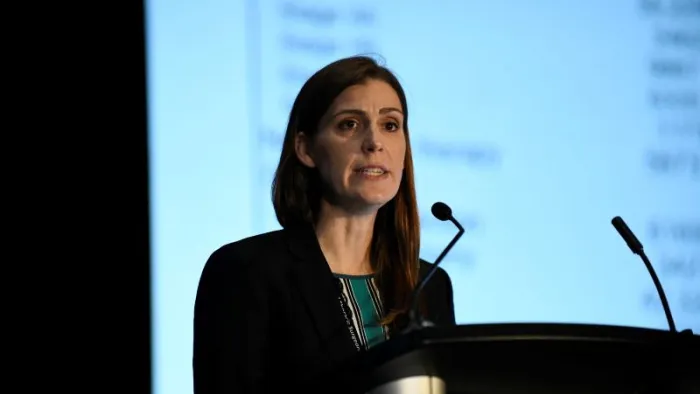
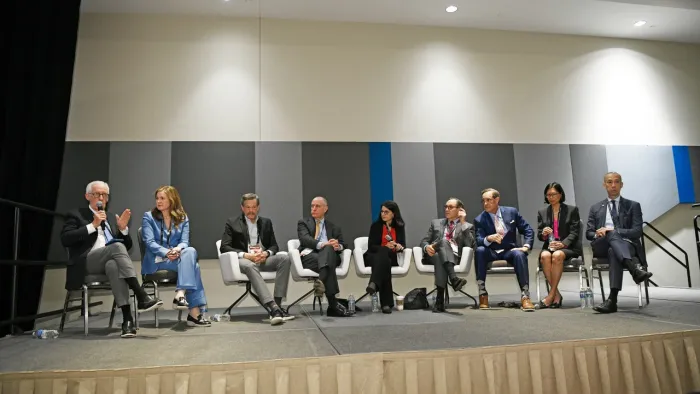
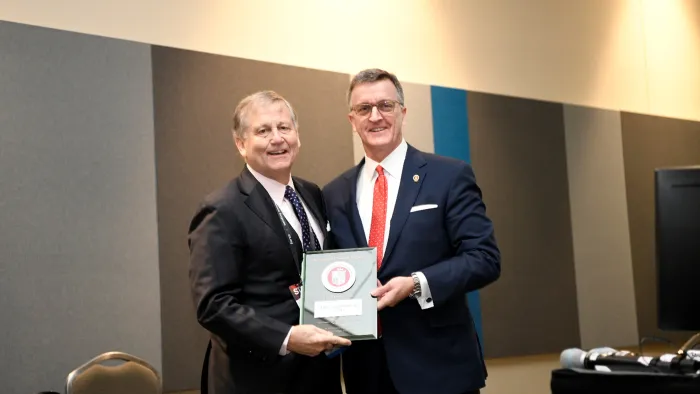
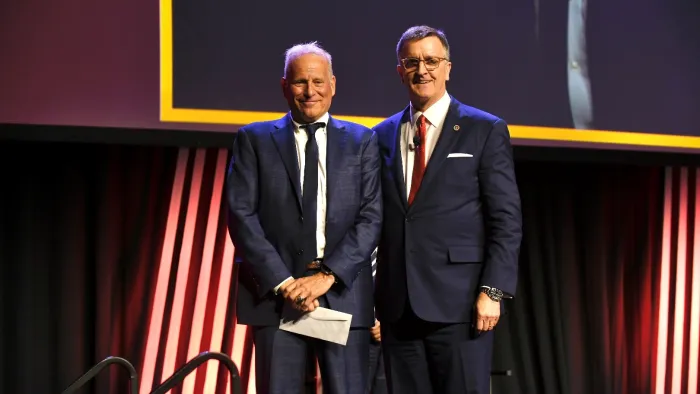
On June 3, 2023, in Miami Beach, Florida, cardiothoracic surgeons from around the world convened for the second annual STS Coronary Conference. Distinguished speakers and luminary surgeons painted a modern, ever-changing landscape of coronary surgery with new technologies, such as medical robotics, increasingly integrated into the specialty daily. Attendees experienced game-changing ideas, back-to-the-basics techniques, and ground-breaking science in diagnostic and therapeutic approaches to heart disease.

“The meeting brought together international leaders in the treatment of coronary artery disease and focused on the fundamentals and advanced therapies for coronary artery disease, including medical management, arterial conduits, and minimally invasive surgical revascularization,” said Joseph F. Sabik III, MD, surgeon-in-chief and vice president for surgical operations at University Hospitals Cleveland Medical Center, and a course director of the conference. “The conversations were engaging and the atmosphere was electric.”

Sessions covered a wide range of topics, including heart team patient selection and approaches; conduit selection and harvest; non-invasive and invasive preoperative workups; and postoperative medical therapy.

Here’s a look at a few key presentations:

Two Decades of Coronary Artery Bypass Grafting in Females: Has Anything Changed?

Elizabeth Norton, MD, Emory University School of Medicine, and a team of surgeons representing the division of cardiothoracic surgery and the division of cardiology at the institution, examined trends in females undergoing isolated coronary artery bypass grafting during the past two decades. What they found is that female CABG mortality at their institution was higher than the male cohort and the overall national average and did not improve over time.​ Females undergoing isolated CABG were increasingly diverse, experienced more preoperative comorbidities, were more likely to undergo urgent CABG, and had greater IMA utilization.

External Stenting for Saphenous Vein Grafts in Coronary Surgery

Saphenous vein grafts have high failure rates with 3% to 12% occluding before hospital discharge, 8% to 25% failing at 1 year, and only 50% to 60% remaining patent after a decade.​ As a research fellow with the department of cardiothoracic surgery at Weill Cornell Medicine, Giovanni Jr. Soletti, MD, wanted to know - can neointima formation be prevented?​

By conducting a study-level meta-analysis of randomized clinical trials and other research methods, Dr. Soletti found that VEST reduces intimal hyperplasia and thickness of SVGs after CABG. This reduction does not translate into fewer graft occlusion events or repeat revascularization compared to non-VEST SVGs at a follow-up of 1.5 years. SVGs harvested with no-touch technique or arterial conduits, when clinically adequate, may be safely used to improve long-term patency. Further long-term data and larger studies are needed.

Intraoperative Extubation After Isolated CABG and Post-Operative Outcomes

There is a well-known association between post-op ventilator time and morbidity in CABG surgery. Les James, MD, a resident cardiothoracic surgeon at NYU Langone Health, explored the impact of routine OR extubation on postoperative outcomes. She studied risk factors and outcomes based on a patient’s age, BMI, EF% STS risk score, STS prolonged vent score, CPB, and XC and concluded that routine OR extubation after isolated CABG is safe and that expanded use of planned OR extubation may be warranted.

All three highlighted abstract presentations were conducted by cardiothoracic fellows. STS encourages residents and fellows to submit original research to an international expert faculty for future presentations.

Review all conference abstracts.

Jun 12, 2023
3 min read
Image
advocacy
The US House of Representatives voted to pass the ‘‘Fiscal Responsibility Act of 2023.” The deal suspends the $31.5 trillion debt ceiling. STS Advocacy explains the implications related to PAYGO, veterans' medical care, COVID-19, and student loans.
3 min read
Molly Peltzman, STS Advocacy Team
Image
advocacy
The US is approaching a potential breach of the debt limit for the first time in history and it could significantly impact healthcare.
2 min read
Haley Brown, STS Advocacy
Image
career development
Understand and embrace a hospital's decision-making process to get the products you need to perform at your best.
4 min read
Elisabeth Dexter, MD
Image
advocacy Update
STS Advocacy staff outline how the end of the Federal Public Health Emergency will affect surgical practices and compensation, and explain how your advocacy efforts have helped to extend some flexibilities.
3 min read
Molly Peltzman, MA
Dr. Griffith discusses the first animal-to-human heart transplant, the work he and his team did in preparation, and how they shattered the barriers around xenotransplantation.
43 min.

Find the latest updates on STS member job changes, promotions, and accomplishments.

de Souza Will Advance Robotics in Tampa

Rodrigo de Souza, MD, has joined the University of South Florida’s Morsani College of Medicine as an associate professor of cardiothoracic surgery. Dr. de Souza, who previously taught at the University of California, San Francisco (UCSF), is employed to develop minimally invasive and robotic cardiac surgery at Morsani and the Heart and Vascular Institute at Tampa General Hospital. He has been an STS Member since 2022.

Dubeau Named First TSF Resident Director

Carolyn Dubeau, MD, has been appointed to serve a two-year term on the board of The Thoracic Surgery Foundation, STS’s charitable arm, as its very first resident director. Dr. Dubeau, currently in her third year of training at UT Health San Antonio, plans to pursue a path in congenital cardiac surgery. She became a Resident/Fellow Member of STS last year.

Cohen Directs Cedars-Sinai Cardiac Surgery Program

Robbin Cohen, MD, MMM, now serves as director of the Cedars-Sinai Cardiac Surgery Program at Huntington Health in Pasadena, CA, an affiliate of the Smidt Heart Institute in Los Angeles. An STS Member and volunteer since 1993, Dr. Cohen serves as chair of STS’s Workforce on Media Relations and Communications, vice-chair of the Standards and Ethics Committee, and is a member of the Workforce for Patient Safety.

Yang Is Frankel Research Professor at University of Michigan

Bo Yang, MD, PhD, has been named the inaugural Frankel Research Professor in Aortic Surgery at the University of Michigan. Dr. Yang joined the university’s Department of Cardiac Surgery in 2011 after a fellowship at Stanford University. A 2015 Thoracic Surgery Foundation Research Grant recipient and an STS member since 2010, Dr. Yang specializes in complex aortic repair.

Bhora Appointed as Hackensack Regional Chair

Faiz Y. Bhora, MD, FACS, was recently onboarded at Hackensack Meridian Health as the inaugural Regional Chair of Surgery for the New Jersey central region. Dr. Bhora previously was system chief of thoracic surgery and director of thoracic oncology at Nuvance Health and chief of thoracic and robotic surgery in the Mount Sinai Health System. He has been an STS Member since 2005.

Toker Takes Helm at West Virginia University

Alper Toker, MD, has been named professor and chief of thoracic surgery at the West Virginia University (WVU) Heart and Vascular Institute and the Department of Cardiovascular and Thoracic Surgery in the WVU School of Medicine. Dr. Toker joined WVU in 2019 and has served as interim chief of Thoracic Surgery for the last several months. An STS Member since 2021, he leads the tracheal surgery program and the thoracic surgical oncology program.

Fiedler, Scrimgeour Make History on All-Female Transplant Team

STS Members Amy Fiedler, MD, and Laura Scrimgeour, MD, were part of a historic heart transplant team at the University of California, San Francisco, in which the surgeon, anesthesiologist, surgical fellow, perfusionist, nurses, and patient were all women.

"I go to work every day because I love cardiac surgery," Dr. Fiedler told the TODAY show, who picked up their story. "To be able to be a part of something bigger that can hopefully inspire the next generation of individuals—be it boys, girls, people of color—for anyone to look at us and say, 'There's no barriers and I can do this,' that's really what makes it worth it."

Apr 20, 2023
3 min read
Recently the General Thoracic (GTSD) and Congenital Heart (CHSD) surgery components joined the STS Adult Cardiac Surgery Database in powering "Best Hospitals" rankings and practice-changing research.
Apr 17, 2023
In this episode, Dr. Tom Cooke interviews Dr. Rian Hasson—assistant professor of thoracic surgery at Dartmouth-Hitchcock Medical Center.
58 min.
Image
career development
As CT surgery continues to innovate, new faculty may have trained in emerging techniques and can bring these new skills to the group.
2 min read
Olugbenga T. Okusanya, MD
Image
career development
A surgical fellow reflects on the loss of a colleague.
5 min read
David Blitzer, MD

In 2022, the cardiothoracic surgical community turned to The Annals of Thoracic Surgery for insights on best practices for patient care, quality metrics from the STS National Database™, a glimpse at the future of surgical techniques, and much more. 

Among the top articles in 2022—in both usage and citations—were the STS/AATS Clinical Practice Guidelines on the Management of Type B Aortic Dissection, as well as an article elucidating why STS and the American Association for Thoracic Surgery did not endorse the 2021 ACC/AHA/SCAI coronary revascularization guidelines. The latter, as explored in the cover story of this issue of STS News, informed new analyses that account for the increased risks in patients with multivessel coronary artery disease, and that support coronary artery bypass grafting as the best first approach in these patients. 

The second most-viewed and most-cited article was “Current and Future Applications of Virtual, Augmented, and Mixed Reality in Cardiothoracic Surgery,” a topic that reinforces the STS community’s interest in adopting promising new techniques and technologies to further enhance their skills. 

Image
Table of top 10 Annals articles by citation

COVID-19 is still very much a relevant topic, as surgeons continue to discover the toll COVID infections—and delays in care exacerbated by lockdown—have taken on their patients in the long term. “Pulmonary Parenchymal Changes in COVID-19 Survivors,” “The Effect of COVID-19 on Adult Cardiac Surgery in the United States in 717,103 Patients,” and “One-Year Outcomes with Veno-venous Extracorporeal Membrane Oxygenation Support” appeared among The Annals’ 10 most popular articles in usage, citations, and overall views.  

STS National Database-driven research graced the top 10 in citations. “Concordance of Treatment Effect,” “Sex Differences in Coronary Artery Bypass Grafting Techniques,” and the unveiling of the new Failure to Rescue quality metric provided guidance for evidence-based quality improvement.  

Novel, condition-specific applications and their implications for surgeons appeared among highly-read topics, including the surgical perspective on neoadjuvant immunotherapy in non-small cell lung cancer, rescue blanket as a provisional seal for penetrating chest wounds, lymphatic disorders and their management in patients with congenital heart disease, and topical vancomycin for reducing the incidence of deep sternal wound complications after sternotomy. 

Image
2022 top 10 Annals articles by usage

STS Members have complimentary access to the journal. Read the latest at annalsthoracicsurgery.org


Apr 12, 2023
2 min read