
Discover the featured content in this month’s The Annals of Thoracic Surgery issue, personally selected by Editor-in-Chief Dr. Joanna Chikwe & Senior Editor Dr. Robbin Cohen, who highlight the authors' important findings, with select illustrations from Dr. Sarah Chen, Associate Editor/CMI. As an additional benefit to your STS Membership and Annals subscription, this monthly newsletter aims to bring expert perspectives on recently published research, straight to your digital doorstep.
Featured in the September 2026 issue...
STS Document | STS Expert Consensus Document (2026) on Addressing Definition and Practices of Sublobar Resection in Non-small Cell Lung Cancer
Khullar, Hayanga, and coauthors
The STS Workforce on Evidence-Based Surgery assembled a panel of thoracic surgeon experts to review the existing literature on sublobar resection for non-small cell lung cancer < 2cm. Seven key areas of controversy were identified, resulting in 21 statements. The areas of controversy and number of statements generated were as follows:
- Sublobar resection vs lobectomy: 3 statements
- Wedge vs segmentectomy: 2 statements
- Central tumor location: 1 statement
- High risk histologic features: 4 statements
- Adequate margins: 3 statements
- Complex segmentectomy: 3 statements
- Intraoperative lymph node assessment: 5 statements
-Robbin Cohen, MD, MMM
Senior Editor

STS Document | The Society of Thoracic Surgeons Adult Cardiac Surgery Database: 2026 Update on Outcomes and Research
Hui, Bowdish, and coauthors
The Adult Cardiac Surgery Database includes data on more than 8.6 million operations from more than 1,000 medical centers. It serves as both a powerful clinical outcomes and quality improvement tool, and a robust platform for clinical research. The authors discuss the current status of the database with respect to cardiac surgical volumes and results. From 2023-2024, overall cardiac surgical volume increased by 1.1%. CABG volume decreased slightly, with 88.7% of cases performed on-pump. Mitral valve repair and mitral valve replacement volumes increased slightly (2.5% and 1.7%), and isolated SAVR increased by 4.2%, along with a 5% increase in TAVR volume. Transcatheter edge-to-edge repair volume increased by 9.9%. The authors further discuss the specifics of CABG, aortic valve, mitral valve, atrial fibrillation, thoracic aortic surgery, and tricuspid valve.
-Robbin Cohen, MD, MMM
Senior Editor
Education & Professional Development | Women in Thoracic Surgery: Breaking Barriers and Building the Future
Antonoff
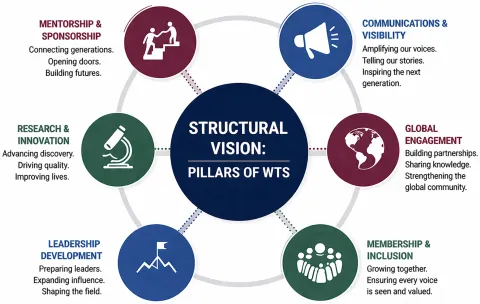
As current President of Women in Thoracic Surgery, Dr. Antonoff describes the evolution of this professional organization, which was conceived as a platform for the integration and growth of women in cardiothoracic surgery. Past accomplishments, future challenges, and a structural vision for the organization, its members, and the entirety of cardiothoracic surgery are provided.
-Robbin Cohen, MD, MMM
Senior Editor
Valve | Early Discontinuation of Long-Term Anticoagulation After Surgical Left Atrial Appendage Occlusion
Goel, Desai, and coauthors
This retrospective analysis of Medicare Provider Analysis and Review data studied 10,407 patients with a preoperative diagnosis of atrial fibrillation or atrial flutter who underwent surgical left atrial appendage occlusion (sLAAO) during CABG or valve surgery from 2016-2019. Fourteen percent (2470 patients) exhibited discontinuation of anticoagulation (AC) within 90 days of surgery. Discontinuation of AC resulted in a 1% higher 5-year risk of embolic events, but the risk of major bleeding was lower (13.7% vs 17.8%, P < .001), and there was no difference in composite outcome of mortality, embolism, or major bleeding (P = .64). Furthermore, the risk of embolism in sLAAO patients discontinuing AC was no different than that in atrial fibrillation patients continuing AC after surgery who did not undergo sLAAO, and the risk of mortality, embolism, or major bleeding was lower (34.5% vs 38.6%; P = .006).
-Robbin Cohen, MD, MMM
Senior Editor
Valve | Long-Term Survival Advantage of Reoperative Surgical Mitral Valve Replacement Over Transcatheter Mitral Valve-in-Valve: A Multicenter Cohort
Won, Malaisrie, and coauthors
This retrospective study compared patients undergoing mitral valve-in-valve (mViV) (139 patients, mean age 68.7 years) with those deemed appropriate for reoperative surgical mitral valve replacement (rSMVR) (90 patients, mean age 66 years). Mitral Valve Academic Research Consortium 30-day outcomes were similar, though prolonged ventilation was higher with rSMVR. At 5 years, rSMVR had lower mortality (20.3% vs 40.9%, P = .01), and lower mean mitral gradients (5.3 mm Hg vs 9.8 mm Hg, P < .001) when compared with mVIV. Freedom from mitral valve reintervention (5.8% vs 6.1%, P = .97) and cumulative heart failure incidence (14.3% vs 22.9%, P = .17) were similar.
-Robbin Cohen, MD, MMM
Senior Editor
Valve | Transcatheter vs Surgical Tricuspid Valve Repair: An Analysis of Medicare Beneficiaries
Mehaffey, Badhwar, and coauthors
This retrospective study utilized the US Centers for Medicare and Medicaid Services inpatient claims database to compare patients with tricuspid regurgitation who underwent isolated surgical tricuspid valve repair (TVr) (1221 patients) vs isolated tricuspid transcatheter edge-to-edge repair (T-TEER) (1540 patients) between 2018 and 2023. Patients receiving T-TEER were older (79 vs 70 years, P < .001), had more heart failure (91% vs 74%, P < .001), more atrial fibrillation (85% vs 72%, P < .001) and more prior sternotomies (26% vs 14%, P < .001). Surgical TVr was associated with higher unadjusted hospital mortality (8.8% vs 2.1%, P < .001) but improved risk adjusted 3-year survival (HR, 0.76; P = .012), lower overall readmission (HR, 0.87; P = .04), lower heart failure-related readmission (HR, 0.79; P = .001), and lower valve reintervention (HR, 0.83; P = .003) when compared with T-TEER.
-Robbin Cohen, MD, MMM
Senior Editor
Congenital & Pediatric | Randomized Clinical Trial Comparing Effects of Pulsatile vs Nonpulsatile Cardiopulmonary Bypass on Neurologic Outcomes
Rajesh, Ündar, and coauthors
This prospective trial randomized 144 consecutive pediatric patients undergoing cardiac surgery on cardiopulmonary bypass (CPB) to nonpulsatile or pulsatile perfusion. S100B levels were obtained at fixed intervals during and after the procedures. S100B levels rose during CPB and were greatest before weaning from CPB and 1 hour after CPB. There was no significant difference in S100B levels between the two perfusion modalities. Thirty-six patients had neural injuries (15 nonpulsatile, 21 pulsatile). For the most part, S100B levels were not sensitive enough to predict neural injury, though 24-hour S100B levels had a weak association with clinical outcomes.
-Robbin Cohen, MD, MMM
Senior Editor
Global Health | Analysis of the First 1000 Operations Performed by a Local Surgical Cardiac Team in Ethiopia: Challenges Faced and Lessons Learned

Agwar, Tilahun, and coauthors
This retrospective review is an analysis of the first 1000 cardiac surgical operations performed by a local cardiac surgical team in Ethiopia. Rheumatic valve disease accounted for 42.4% of procedures and congenital heart disease accounted for 40.7%. Annual procedures increased from 31 in 2017 to 204 in 2025. Overall, 30-day mortality was 2.9%. Major challenges included limited access to repair-enabling consumables and intraoperative transesophageal echocardiography, constrained intensive care capacity, advanced disease at presentation, and public and professional hesitancy. Mitigating strategies included utilizing phased case selection, standardized clinical pathways, public engagement, and the establishment of a locally governed charitable surgical platform to support access to surgical therapy.
-Robbin Cohen, MD, MMM
Senior Editor
Coronary | Extended Zone Right Internal Thoracic Artery Coronary Artery Bypass Graftin
Alaraj, Bakaeen, and coauthors
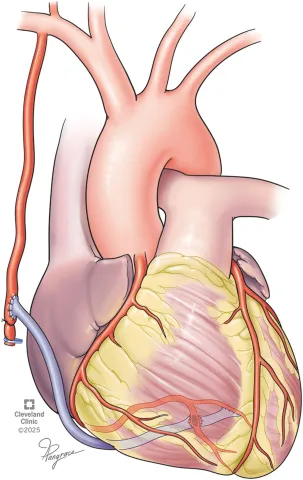
The authors describe how the right internal thoracic artery (RITA) can be utilized as a composite graft, by harvesting only its proximal half, and then extending it with a reversed saphenous vein graft or radial artery connected with an end to side anastomosis. Potential advantages include 1) graft length that will reach almost any coronary artery, 2) only the proximal half of RITA is harvested, reducing harvest time and potential for sternal wound complications, 3) end-to-side anastomosis is technically easier than end-to-end, 4) vein or radial artery handling during multiple sequential distal anastomoses is easier than RITA alone, and 5) can facilitate combined CABG/ascending aortic replacement by eliminating the need for anastomosing grafts to synthetic aortic graft material.
-Robbin Cohen, MD, MMM
Senior Editor

EDITORS’ CHOICE
Annals of Thoracic Surgery Short Reports
Vol 4 Number 3 September 2026
Be sure to also check out these highlighted articles from the most recent issue of Annals of Thoracic Surgery Short Reports…
Science & Research Methods | Assessing the Evidence Behind Guidelines in Cardiothoracic Surgery: A Systematic Review
Valderrama, Velotta, and coauthors
Aorta | Type A Aortic Dissection in a Complex Pregnant Patient With Marfan Syndrome
Robayo, Sabe, and coauthors
Lung | Right Lung Torsion After Minimally Invasive Cardiac Surgery in a Child
Kanamori, Yoshimura, and coauthors