- Rep. Eric Burlison toured SSM Health to see how federal healthcare policies affect surgeons, hospitals, and patient care.
- Surgeons demonstrated advanced technologies like robotic surgery and robotic bronchoscopy, emphasizing the need for access to innovative care.
- A lung cancer survivor shared how early detection and specialty treatment led to remission, reinforcing the importance of the bipartisan Mobile Cancer Screening Act.
- Hospital leaders and physicians stressed that stable NIH funding is essential for medical research that drives new treatments, improves outcomes, and strengthens local economies.
- Discussions also focused on physician shortages and Medicare reimbursement challenges, with advocates supporting expanded residency training and payment reforms.
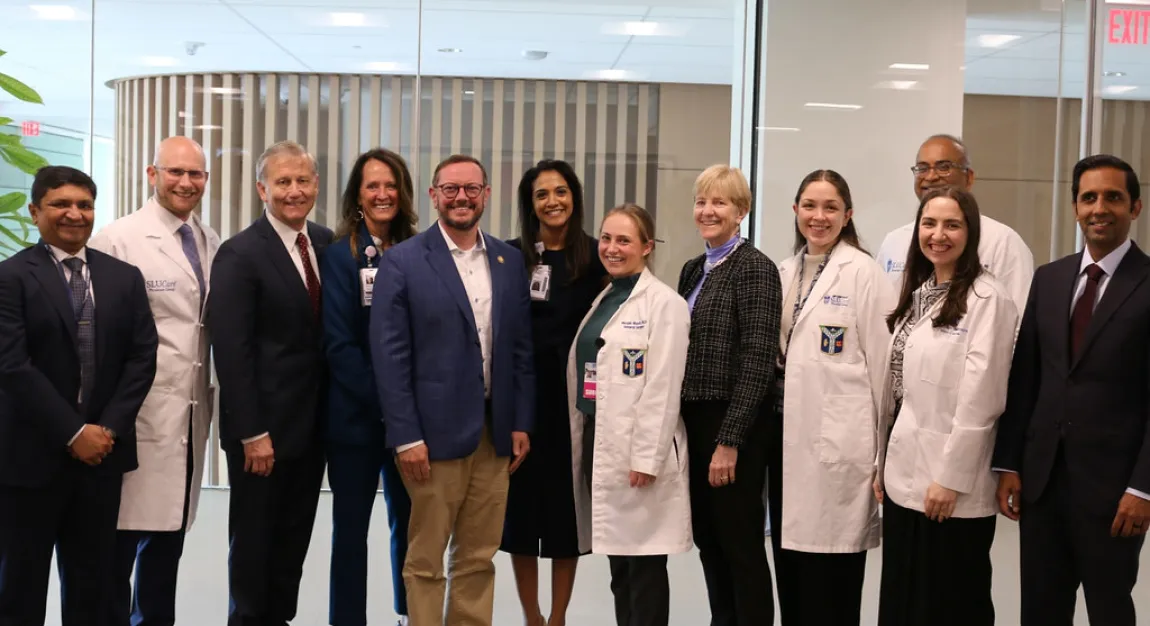
On May 6, 2026, Representative Eric Burlison (R-MO) visited SSM Health Saint Louis University Hospital to learn how policy decisions impact surgeons—and the patients they serve. When lawmakers visit a hospital, advocacy becomes tangible. That was the case when Rep. Burlison toured SSM Health Saint Louis University Hospital alongside cardiothoracic surgeons Dr. Jen Vigneswaran, Dr. Keith Naunheim, Dr. Nirmal Veeramachaneni and Dr. Joseph Platz. Congressman Burlison saw firsthand the impacts of the decisions being made in Washington, DC.
The morning began with a walking tour that highlighted innovation in action, including a look at the campus and plans for the new SSM Cardinal Glennon Children’s Hospital. Congressman Burlison also witnessed cutting-edge technology that is reshaping thoracic surgery—such as advanced robotic platforms used for minimally invasive procedures and robotic bronchoscopy—tools that can improve precision, recovery time, and patient experience when supported by sustainable payment and workforce policies.
In the discussion that followed, the visit’s most powerful moment centered on a constituent story. A patient of Dr. Vigneswaran’s shared how timely specialty care and early detection helped lead to successful treatment of his lung cancer—he is now in remission. His story underscored the reality cardiothoracic surgeons see too often: many patients are diagnosed too late simply because screening is out of reach.
The patient urged Rep. Burlison to support the bipartisan, bicameral Mobile Cancer Screening Act, which would support mobile screening units to bring CT-based cancer screening to rural and underserved communities. For districts with long travel times to major medical centers, mobile screening can be the difference between a curable diagnosis and a devastating one.
Participants also emphasized the importance of sustained federal investment in research. National Institutes of Health (NIH) funding supports the early-stage studies that drive tomorrow’s breakthroughs—often long before private-sector investment is available. Leaders at Saint Louis University School of Medicine described how federally funded research translates into new therapies, better outcomes, and stronger local economies, making stable NIH funding a critical priority for surgeons and patients alike.
Workforce challenges were also part of the discussion. As the nation continues to face an impending physician shortage, expanding graduate medical education capacity remains essential. This conversation was timely as SSM Health just recently began their fellowship program being led by Dr. Joseph Platz. The Physician Shortage Reduction Act was raised as one approach to increase residency training slots and help communities recruit and retain the specialists needed to provide complex surgical care close to home.
Finally, the group discussed the impact of Medicare payment policy on access to care. When reimbursement falls behind the real cost of delivering highly specialized procedures, hospitals and practices may be forced to limit services, especially in regions already strained by workforce shortages.
Site visits like this one are a reminder that effective health policy is built on real-world insight. By opening their doors and sharing clinical perspectives, Dr. Vigneswaran and Dr. Naunheim helped connect the dots between federal decisions and bedside realities. If you’re looking for a meaningful way to expand opportunities advocacy in your community, contact Haley Howell at hhowell@sts.org to set up a site visit with your member of Congress today.