On day three of the STS 2025 Annual Meeting, Dr. Jeremiah Hayanga, professor of thoracic surgery, Department of Cardiovascular and Thoracic Surgery, West Virginia University, will present a session titled, Endobronchial Valve Therapy (EVT) versus Lung Volume Reduction Survey (LVRS) in the US. In this presentation, Dr. Hayanga and his research team will share new, risk-adjusted study results that provide fresh insights into treatments for severe emphysema.

Recent findings suggest that as surgical practices evolve, LVRS may offer better long-term results for patients with advanced emphysema compared to EBV therapy. Although EBV patients had shorter hospital stays, lower charges, and fewer pre-existing conditions, the study revealed they experienced more complications and a higher risk of death over time than those who underwent LVRS.

To be held Sunday, Jan. 25, at 8 a.m. during the larger “Modernized Solutions for Lung Failure, From Bench to Bedside” session, Dr. Hayanga will also discuss the limitations of lung transplantation as a solution for severe emphysema due to the shortage of donor organs. 

“Surgical lung volume reduction, explored in the late 1990s, did not gain widespread acceptance due to its associated risks and the small pool of patients who were thought to benefit,” says Dr. Hayanga. “However, with advancements in surgical techniques and risk management, LVRS has seen improved outcomes, offering hope for patients who are not candidates for lung transplants.”

Jan 20, 2025
1 min read

During the Saturday, Jan. 25 presentation of the James S. Tweddell Memorial Paper for Congenital Heart Surgery, Reilly Hobbs, MD, from the University of Utah Medical Center will explore the relationship between the volume of Norwood procedures performed at a center and patient outcomes based on findings from the National Pediatric Cardiology – Quality Improvement Collaborative Database study.

Image
Dr. Reilly Hobbs
Dr. Reilly Hobbs presented the Tweddell Memorial Paper on day two of STS 2025. 

The Norwood procedure, a critical surgery for infants with single ventricle defects, has been extensively studied, but findings on how case volume affects outcomes have been inconsistent. This study examines data that clarifies the relationship between center case volume and survival and morbidity in patients undergoing this complex surgery.

In presenting the findings of the study, Congenital Heart Surgery, Volume-Outcome Relationship of Norwood Procedures: Insights from the National Pediatric Cardiology – Quality Improvement Collaborative Database, Dr. Hobbs will explain how centers were grouped based on their annual case volume—low, medium, and high—and how preoperative risk factors, complications, and survival outcomes were compared. He will also highlight how patients at high-volume centers had better outcomes than those at low-volume centers, including higher survival rates and lower mortality, particularly among patients with additional high-risk features. 

“The findings indicate that the number of Norwood procedures performed at a center significantly impacts patient outcomes with high-volume centers consistently achieving better results than low-volume centers,” says Dr. Hobbs. “It’s essential to emphasize the role of case volume in complex congenital heart surgeries and explore the potential benefits of directing high-risk patients to more experienced centers. Further research is needed to identify the key factors that contribute to improved outcomes at high-volume centers, ultimately enhancing care for single ventricle patients.”
 

Jan 20, 2025
2 min read

In a landmark achievement for healthcare in Southeast Asia, St. Luke's Medical Center has launched the region's first robotic cardiac surgery program. This historic initiative was made possible through a collaborative effort between St. Luke's multidisciplinary team, led by Drs. Marvin Martinez and Ramiro Pablo, and the expert team from West Virginia University's (WVU) Heart and Vascular Institute, including Dr. Vinay Badhwar, Dr. Lawrence Wei, and physician assistant Herald Fe.

The program debuted with a series of innovative robotic-assisted cardiac procedures, showcasing the transformative potential of this advanced technology. Among the groundbreaking surgeries performed were:

  • Robotic MIDCAB (Minimally Invasive Direct Coronary Artery Bypass)
  • Robotic bileaflet mitral valve repair for severe mitral regurgitation (MR) due to bileaflet myxomatous disease
  • Robotic mitral valve repair for endocarditis, including anterior mitral leaflet perforation
  • Robotic adult congenital atrial septal reconstruction using a bovine patch for a patient with a common atrium
  • Robotic aortic valve replacement (AVR) for a patient from Papua New Guinea

The first robotic valve surgery—a repair of a severely regurgitant mitral valve in a 40-year-old patient—marked a defining moment in the program's success. With guidance from WVU's Heart and Vascular Institute, the procedure was completed with precision and excellence, underscoring the collaboration's impact.

Dr. Pablo expressed his excitement, saying, "This is a monumental step forward for cardiac care in Southeast Asia. Our partnership with the WVU team has empowered us to provide patients with less invasive, highly precise procedures and faster recoveries."

Dr. Martinez added, "Establishing this robotic cardiac surgery program has been a dream realized through our team's dedication and the invaluable expertise of our WVU partners. This is just the beginning of a new era in cardiac care."

Reflecting on the collaboration, Dr. Badhwar remarked, "Teamwork truly makes the dream work. The exceptional multidisciplinary team at St. Luke's has shown that vision, determination, and collaboration can achieve extraordinary outcomes."

St. Luke's Robotic Cardiac Surgery Program is set to advance care across the region, offering minimally invasive options that reduce pain, recovery time, and the risk of complications. 


Jan 15, 2025
2 min read
#drupal-member-id { display: none !important; }
Image
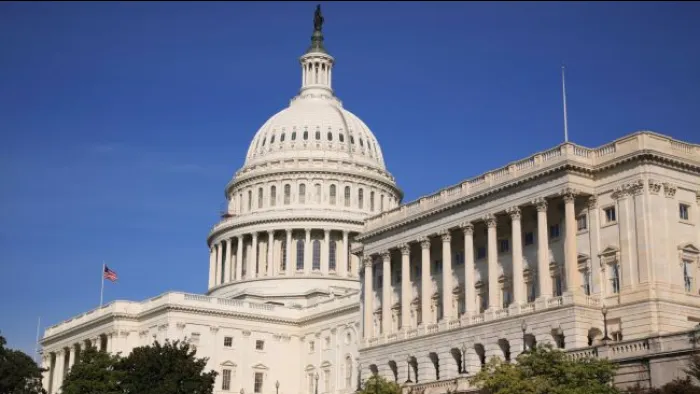
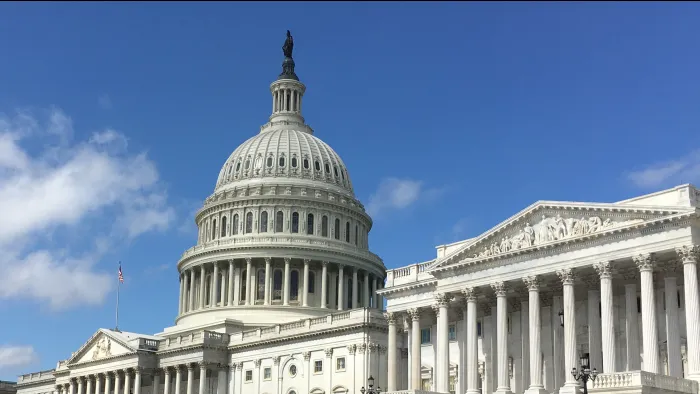
US Capitol building with trees

In December, lawmakers passed a short-term funding bill to keep the government running through March 14, 2025. However, last-minute chaos drastically reduced the size and scope of the year-end package, which resulted in many critical healthcare priorities being left out.

2 min read
Derek Brandt, JD, STS Advocacy

Host Dr. Michael Maddaus talks with Jonathan Clark, leadership scholar at UTSA and co-author of Leading Through: Activating the Soul, Heart, and Mind of Leadership, about prioritizing people, purpose and real productivity to transform an organization. Hear compelling stories that show how "the legacy model of leadership can be destructive," resulting in what he calls "organizational darkness."  Learn about a positive model focused on caring for people and helping them thrive. 

1 hr

In this episode, Dr. Hari Keshava talks with Dr. Sid Murthy, section head, thoracic surgery at Cleveland Clinic, about thoracic surgical emergencies related to pulmonary and lung surgeries...and how optimal management of these situations often requires surgeons to anticipate, collaborate and be prepared with a well-thought-out action plan. Listen today. 
 

40 mins

The rapid advancement of robotic technology has revolutionized the field of thoracic surgery. At the same time, the technological leap has highlighted a pressing need to bridge the educational gap in the training of thoracic surgery trainees. To address this issue, the Society of Thoracic Surgeons has developed an expert consensus document outlining a framework for a standardized national robotic curriculum.

A recent paper published in The Annals of Thoracic Surgery, authored by the Task Force on Robotic Thoracic Surgery and the Workforce on E-learning and Educational Innovation, has provided expert consensus statements for thoracic surgery training programs. This paper was created following an extensive literature review and expert consensus achieved through a modified Delphi process. It outlines expectations for programs, essential training components, as well as assessment and feedback methods.

Program Expectations

  • Standardization: The consensus document advocates for standardized robotic thoracic curricula across all Accreditation Council for Graduate Medical Education-accredited programs.
  • Dual Console Training: Trainees should have ample opportunity to practice on dual consoles during most cases to actively participate in the surgical process.
  • Bedside Assistance: The presence of a trained bedside assistant during teaching cases is strongly recommended.

Components of Training

  • Theoretical & Practical: The curriculum must integrate theoretical and practical learning.
  • Pre-Console Training: Online modules on robotic components and hands-on training are mandatory before console surgery.
  • VR Simulation: Proficiency in digital/virtual reality simulation modules is a prerequisite for console surgery.
  • Wet Lab Training: Mandatory participation in at least one wet lab per year.
  • Emergency Conversion: Mandatory to perform with the trainees or OR team at least once a year.

Assessment and Feedback

  • Skill Assessment: Utilize objective tools like Global Evaluative Assessment of Robotic Skills to assess technical competency.
  • EPA Development: Develop Entrusted Professional Activity for pulmonary resection.
  • Performance Review: Regular video review and analysis of robotic performances provide valuable feedback.

By implementing the recommendations outlined in this expert consensus document, thoracic surgery training programs can ensure that trainees are well-prepared to perform complex robotic procedures and contribute to the advancement of thoracic surgery.

"Robotic surgery is rapidly evolving, and it's crucial that our training programs keep pace,” said Samuel Kim, MD, Northwestern Medicine, who chaired the task force that produced the document. "To ensure a skilled workforce capable of meeting the demands of modern thoracic surgery, we must prioritize a standardized curriculum that enhances resident education and bridges any existing educational disparities across training programs. By fostering a comprehensive learning environment that emphasizes both refined technical skills and sound clinical judgment, we can effectively train the next generation of surgical leaders."

Read the Annals article here.

Jan 6, 2025
2 min read
Image
US Capitol building with blue skies

STS is proud to share key advocacy achievements from 2024 that have advanced the field of cardiothoracic surgery and improved patient care. These successes reflect the dedication and collaboration of our members, leaders, and staff in influencing critical policy decisions and advocating for the profession.

3 min read
Derek Brandt, JD, STS Advocacy
Image
advocacy

The Centers for Medicare & Medicaid Services (CMS) recently finalized a new policy impacting the coding and reimbursements for 90-day surgical global periods. This change may impact reimbursement so surgeons and their staff should learn about the details of this policy going into effect on January 1, 2025.

6 min read
Molly Peltzman, STS Advocacy