(OAKBROOK TERRACE, Illinois, January 29, 2026) — Joint Commission has partnered with two leading, highly respected medical specialty societies, The Society of Thoracic Surgeons (STS) and the American College of Cardiology (ACC), to leverage clinical performance data for a new cardiac care certification driven by measures of patient outcomes.
The Society of Thoracic Surgeons today announced the 2026 Nina Starr Braunwald Extraordinary Women in Cardiothoracic Surgery Award recipients at its 62nd Annual Meeting in New Orleans. Now in its fourth year, the award is co-sponsored by STS and Women in Thoracic Surgery (WTS) and recognizes women cardiothoracic surgeons who exemplify exceptional clinical expertise, leadership, and dedication to advancing the field.
This year’s honorees are Emily Farkas, MD; Carolyn Jones, MD; and Rosemary Kelly, MD.
Image
2026 Nina Starr Braunwald Extraordinary Women in CT Surgery Award recipients (l to r) Dr. Emily Farkas, Dr. Rosemary Kelly, and Dr. Carolyn Jones.
“We are proud to honor these outstanding women and celebrate their accomplishments as surgeons, leaders, and mentors,” said STS Immediate Past President Jennifer C. Romano, MD, MS. “Their dedication and example motivate and guide the next generation of cardiothoracic surgeons—women and men alike—to push the boundaries of innovation in their specialties.”
Meet these these accomplished surgeons:
Dr. Emily Farkas, a cardiothoracic surgeon whose career is defined by an unwavering commitment to patient care and global service. One of the approximately 3% of cardiac surgeons who are women, she also holds the distinction of being the first woman accepted into cardiothoracic surgery training at Yale University. After completing her training, she spent five years on the faculty at Saint Louis University as an assistant professor of surgery.
A passion for global medicine has shaped Dr. Farkas’s career from its earliest days, including delivering her first baby in Kenya and completing medical school electives in Sri Lanka. This commitment ultimately led her to step away from a traditional academic path to focus on humanitarian cardiac surgery. Through partnerships with various charitable organizations, she has directed or participated in more than 50 surgical missions worldwide, providing free, life-saving heart surgery in countries including Brazil, Ghana, Nepal, Mongolia, Myanmar, Nigeria, and Vietnam.
Dr. Farkas is an associate professor of surgery and associate director of global health in surgery at Indiana University School of Medicine, as well as chief of cardiac surgery at the Richard L. Roudebush VA Medical Center in Indianapolis. A recognized leader in the field, she serves on numerous STS and WTS committees, an associate editor for CTSNet, and holds leadership roles with CardioStart International, EMERGENCY USA, and the Cardiac Surgery Intersociety Alliance. Her career reflects a powerful blend of surgical excellence, service, and advocacy for equitable access to care.
Dr. Carolyn Jones' journey to leadership in cardiothoracic surgery is marked by resilience, compassion, and a lasting commitment to education and mentorship. She began her medical career as a nurse and went on to complete medical school at George Washington University while raising a family as a single mother. She trained in general and cardiothoracic surgery at the University of Rochester, where she later became the first woman hired as an attending cardiothoracic surgeon and now serves as chief of thoracic surgery.
An associate professor of surgery and chief of thoracic and foregut surgery at the University of Rochester Medical Center, Dr. Jones is widely admired for her clinical excellence, technical skill, and ability to work well with others. While she may not seek national recognition, her impact is deeply felt by patients, trainees, nurses, and colleagues throughout upstate New York. Known for her empathy, bedside manner, and dedication to patient-centered care, she has received numerous teaching and service awards over the course of her career.
Dr. Jones has played a vital role in surgical education, serving as associate residency program director and enhancing curricula and training experiences for residents and medical students. Later in her career, she adopted minimally invasive and robotic techniques to further improve patient outcomes, building strong, collaborative teams in the process. A steadfast mentor and role model, Dr. Jones exemplifies leadership grounded in service, respect, and inclusion, creating environments where patients and trainees alike feel valued and supported.
Dr. Rosemary Kelly, a nationally recognized leader whose career has advanced cardiothoracic surgery while opening doors for women and underrepresented groups across the specialty. She is professor of surgery at the University of Minnesota Medical School, executive vice chair for cardiovascular and thoracic surgery, chief of the heart and vascular service line at MHealth Fairview, and program director of the cardiovascular and thoracic surgery fellowship program. She also holds the C. Walton and Richard C. Lillehei Professorship in Cardiothoracic Surgery.
A dedicated mentor, Dr. Kelly supports trainees and junior faculty through formal programs and personal sponsorship, offering practical guidance on career development and work-life integration. Her research portfolio, supported by the NIH, VA, and other major agencies, includes more than 140 peer-reviewed publications spanning clinical innovation, as well as scholarship on mentorship and resilience in surgery. Clinically, she combines excellence with service, having led major cardiothoracic and transplant programs and delivered distinguished lectures at institutions dedicated to advancing women in medicine.
“Each of these women are shaping the future of cardiothoracic surgery,” said Mara Antonoff, MD, president of Women in Thoracic Surgery, “Their expertise, leadership, and dedication are driving progress in our field and opening doors for the women who will follow.”
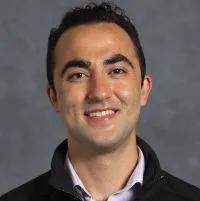
As the population undergoing mitral valve surgery continues to age, the choice between repair and replacement has taken on new urgency. At the "Masters of the Mitral Valve" session on Thursday, Jan. 29 at 10:10 a.m., Dr. Allen Razavi of Cedars-Sinai Medical Center will address this issue in the Is Degenerative Mitral Valve Repair Superior to Replacement in Patients Aged >65 Years? presentation.
Image
Dr. Allen Razavi
Drawing from a large national cohort within the Society of Thoracic Surgeons Adult Cardiac Surgery Database linked with Medicare data, Dr. Razavi and his team compared long-term outcomes for patients aged 65 and older who underwent mitral valve repair with those who received mitral valve replacement. Their objective was to evaluate differences in survival, major complications, and the need for future mitral valve interventions across treatment strategies.
The study found that mitral repair was associated with significantly improved long-term survival compared with replacement, with benefits persisting across much of the older age spectrum. Patients who underwent repair also experienced lower rates of heart failure readmission, stroke, and major bleeding. While overall reintervention rates were similar between groups, repair patients tended to require earlier surgical reintervention, whereas replacement patients were more likely to undergo late transcatheter procedures.
Dr. Razavi will present findings showing how evolving treatment options and advances in repair techniques prompted the team to reassess outcomes in this population. The growth of transcatheter mitral therapies and improvements in surgical durability have heightened the need to revisit traditional assumptions about when repair should be favored over replacement.
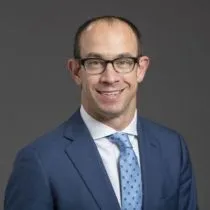
The Richard E. Clark Memorial Paper on day one of STS 2026, Optimal Management for Moderate Aortic Stenosis at the Time of Coronary Artery Bypass Grafting, will be featured during the “Optimizing AVR: Aiming for Perfection” session on Thursday, Jan. 29, at 11:00 a.m. In this presentation, Pey-Jen Yu, MD, of Northwell Health, will explore how best to manage moderate aortic stenosis (AS) in patients undergoing coronary artery bypass grafting (CABG), a question that has grown increasingly important as transcatheter approaches continue to reshape treatment pathways.
Image
Dr. Pey-Jen Yu
Drawing from a large cohort in the Society of Thoracic Surgeons Adult Cardiac Surgery Database (ACSD), linked with national inpatient records, Dr. Yu and colleagues compared outcomes for patients who had isolated CABG versus those who received CABG combined with aortic valve replacement (AVR). The goal was to understand both the immediate risks and the longer-term implications of addressing—or deferring—valve intervention in patients with moderate AS.
The study found that patients undergoing CABG alone experienced slightly lower operative risk, but they were more likely to require later aortic valve intervention and were at increased risk for readmission related to heart failure. Meanwhile, those who underwent concomitant AVR faced a higher initial risk but significantly lower likelihood of needing future valve procedures. Importantly, mid-term survival was similar between the two groups.
In her presentation, Dr. Yu will highlight how the rapid expansion of transcatheter valve therapies served as a key motivation for this work, prompting the team to revisit longstanding assumptions about when to intervene on a moderately stenotic valve during open-heart surgery.
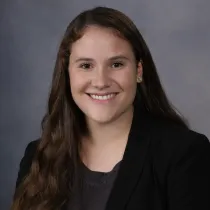
During the "Diagnosing Patients: Do You Know Before You Go?" session on day one of STS 2026 at 10:15 a.m., Talal Alzghari, MD, of One Brooklyn Health-Brookdale University Hospital Medical Center, will present Oncological and Surgical Outcome Differences in Never-Smoker Women Compared to Ever-Smoker Women and Men. In this presentation, Dr. Alzghari examines how gender and smoking status independently shape surgical and long-term outcomes following lung cancer resection—an increasingly important question as lung cancer rates continue to rise among women.
Image
Dr. Talal Alzghari
Although smoking remains the leading risk factor for lung cancer, prior studies have shown conflicting results regarding its impact on postoperative outcomes when gender is considered. To clarify these relationships, Dr. Alzghari and colleagues analyzed national registry data to compare perioperative and oncologic outcomes among women and men with differing smoking histories who underwent resection for non-small cell lung cancer (NSCLC).
Analyzing more than 145,000 elective NSCLC resections from the Society of Thoracic Surgeons General Thoracic Surgery Database, the investigators found that never-smokers are becoming more common over time in both men and women. Never-smoker women emerged as a distinct group with fewer comorbidities, lower perioperative risk, and the most favorable long-term survival, while ever-smoker men experienced the highest complication rates and poorest survival. These differences persisted after risk adjustment, highlighting the independent influence of both gender and smoking status on surgical and oncologic outcomes..
In his presentation, Dr. Alzghari will discuss how these findings can inform preoperative counseling, risk stratification, and treatment planning for patients undergoing lung cancer surgery. He emphasizes that understanding the combined effects of gender and smoking history is essential to delivering more personalized, data-driven care for patients with NSCLC.
The Centers for Medicare & Medicaid Services (CMS) has initiated a National Coverage Analysis (NCA) for transcatheter aortic valve replacement (TAVR), a process that may affect where and how TAVR is delivered and which patients are eligible for treatment.
Breakthrough research to be presented at the 2026 Society of Thoracic Surgeons (STS) Annual Meeting suggests that more comprehensive lymph node assessment during surgery is critical to accurately staging and treating patients with clinically node-negative non-small cell lung cancer (NSCLC). Christopher Seder, MD, thoracic surgeon and professor of surgical sciences at Rush University Medical Center, will present the J. Maxwell Chamberlain Memorial Paper in General Thoracic Surgery, Association Between Nodal Assessment, Upstaging, and Survival in Resected Clinically Node-negative Non-small Cell Lung Cancer, on Saturday, Jan. 31, at 7:35 a.m. during the “Research in Focus: Distinguished Abstracts” session.
Image
Dr. Christopher Seder
Although imaging may indicate that NSCLC has not spread to lymph nodes, global surgical standards vary widely regarding how many nodes should be removed and evaluated. In North America, guidelines introduced in 2021 recommend assessment of one N1 node in the hilar or root of the lung and three N2 nodes in the mediastinum. Using data from the STS General Thoracic Surgery Database, researchers found that this approach may miss disease spread, as cancer was more frequently identified in N1 nodes than in N2 nodes, with many metastatic nodes located adjacent to the bronchi. The study recommends removal and evaluation of more than one N1 node in addition to at least three N2 nodes.
The analysis examined a large, multi-center cohort of clinically node-negative NSCLC patients treated over a three-year period. Patients underwent wedge resection, segmentectomy, or lobectomy, and a meaningful proportion were upstaged after surgery when lymph node dissection revealed more advanced disease than initially diagnosed. Patients who received neoadjuvant therapy, underwent preoperative mediastinoscopy, lacked PET-CT imaging, or had incomplete pathology data were excluded. Expanded nodal assessment improved detection of occult disease, enabling more accurate staging and more appropriate use of chemotherapy and additional treatments.
“We are narrowing down the best techniques for lymph node dissections in patients with lung cancer to give the best chance of identifying any cancer that is there and improving survival,” says Dr. Seder. “The onus here is not only on surgeons to dissect out more lymph nodes, but on pathologists to take this lung specimen we give them and do a very thorough evaluation of that lung specimen to get all the additional lymph nodes with cancer that are hiding in the specimen.”
During the Saturday, Jan. 31, 7:50 a.m. presentation of the James S. Tweddell Memorial Paper for Congenital Heart Surgery, Elaine Griffeth, MD, of Mayo Clinic, will present new research as part of the “Research in Focus: Distinguished Abstracts” session at the 2026 Society of Thoracic Surgeons (STS) Annual Meeting. Her talk, Extended Validation of an Institutional Machine Learning Model for Postoperative Morbidity and Mortality Risk in Adult Congenital Heart Disease Patients Undergoing Cardiac Reoperation, will explore how advanced risk modeling can better inform surgical decision-making for adults with congenital heart disease (CHD).
Image
Dr. Elaine Griffeth
Adults with CHD represent a growing and medically complex population. Most were born with structural heart defects and underwent surgery early in life, yet many require additional cardiac operations as adults. Prior surgeries, evolving anatomy, and long-term health challenges make it difficult to accurately estimate operative risk using existing tools designed for the broader adult cardiac surgery population, highlighting the need for a CHD-specific national risk assessment model.
The study analyzed cases from the STS Adult Cardiac Surgery Database spanning several years, building on prior Mayo Clinic work using machine learning and logistic regression. Seven factors were strongly associated with postoperative morbidity and mortality: sex, age, single-ventricle physiology, surgical urgency, kidney function, ejection fraction, and prior heart operations.
“This is a work in progress,” says Dr. Griffeth. “We want to have high reliability in the surgeries we are offering, and we are trying to tailor this model with data from past patients. The more informed patients are about their risks for surgery, the better.”
New findings slated for presentation at the 2026 Society of Thoracic Surgeons (STS) Annual Meeting suggests that aortic hemiarch reconstruction provides outcomes comparable to more complex extended arch reconstruction in patients over age 65 with acute type A aortic dissection (ATAAD). John Spratt, MD, clinical assistant professor of thoracic and cardiovascular surgery at University of Florida Health, will present Extended Arch Reconstruction for Acute Type A Dissection Does Not Impact Long-Term Survival or Reoperation in Patients Over Age 65: An STS-CMS Longitudinal Analysis during Sunday’s 11:15 a.m. adult cardiac session, “Tips & Tricks to Get Through Any Dissection.”
Image
Dr. John Spratt
The study used a risk-adjusted analysis of patients from the STS Adult Cardiac Surgery Database, which includes millions of adult cardiac surgery records. Patients underwent surgery at U.S. hospitals over several years, with most receiving aortic hemiarch reconstruction and the remainder undergoing extended arch reconstruction. Researchers evaluated postoperative mortality, stroke, and the need for reintervention for aortic disease and found no significant differences in these outcomes among patients ages 65 and older.
Extended arch reconstruction is a more complex operation that includes replacement of the aortic valve and repair of the ascending aorta, aortic arch, and the major arteries branching from the arch. Hemiarch reconstruction, by comparison, involves replacement of the aortic valve and repair of the ascending aorta and the underside of the aortic arch. Because aortic dissections most commonly affect older adults and require emergency surgery, surgeons must weigh the benefits of a more extensive repair against increased operative time, longer heart-lung bypass duration, and greater neurologic risk—factors that older patients often tolerate less well than younger individuals.
“You have to balance what a patient may need on paper, compared with what their overall risk profile is,” says Dr. Spratt. “The majority of patients age 65 and older will be fine with hemiarch reconstruction and have the same outcomes as they would with a higher-risk procedure.”
Lung cancer causes more deaths in the United States each year than breast, colon, and prostate cancers combined. Yet, despite strong evidence showing that annual screening with low-dose CT (LDCT) scans significantly reduces lung cancer mortality among high-risk individuals[1],[2], fewer than 18.2% of eligible patients currently undergo screening.
Simultaneously published in The Annals of Thoracic Surgery, The Journal of the American College of Radiology, and The International Journal of Radiation Oncology, Biology, Physics and jointly issued by The Society of Thoracic Surgeons (STS), The American College of Radiology (ACR), and The American Society for Radiation Oncology (ASTRO), the article examines recurring methodological flaws in the literature that may limit knowledge of, and access to, lung cancer screening (LCS).
The editorial originated from the STS Lung Cancer Screening Task Force and was led by its chair, Elliot Servais, MD, Department of Surgery at Lahey Hospital & Medical Center.
“In this paper, we address these misconceptions head-on with the goal of expanding access to screening and saving more lives from lung cancer,” said Dr. Servais. “Lung cancer screening saves lives. Multiple high-quality studies have clearly demonstrated its benefit. Despite this strong evidence, persistent misinformation about perceived harms continues to limit the uptake of this life-saving test.”
The authors note that methodological shortcomings in published research—including overestimation of downstream complications, misrepresentation of false-positive rates, and flawed analyses of CT-related radiation risk—may deter patients and clinicians from lung cancer screening, highlighting the need for accurate, evidence-based communication of its benefits and risks.
As a first-generation immigrant, the first in my family to graduate from college, and now the first to pursue medicine, my path has been anything but traditional.
As we close out another legislative year, we are left with uncertainty about key healthcare-related initiatives. While the debate over Obamacare subsidies and rising health insurance premiums came into sharp focus over the course of the recent federal government shutdown, the standoff ended without a clear path forward.