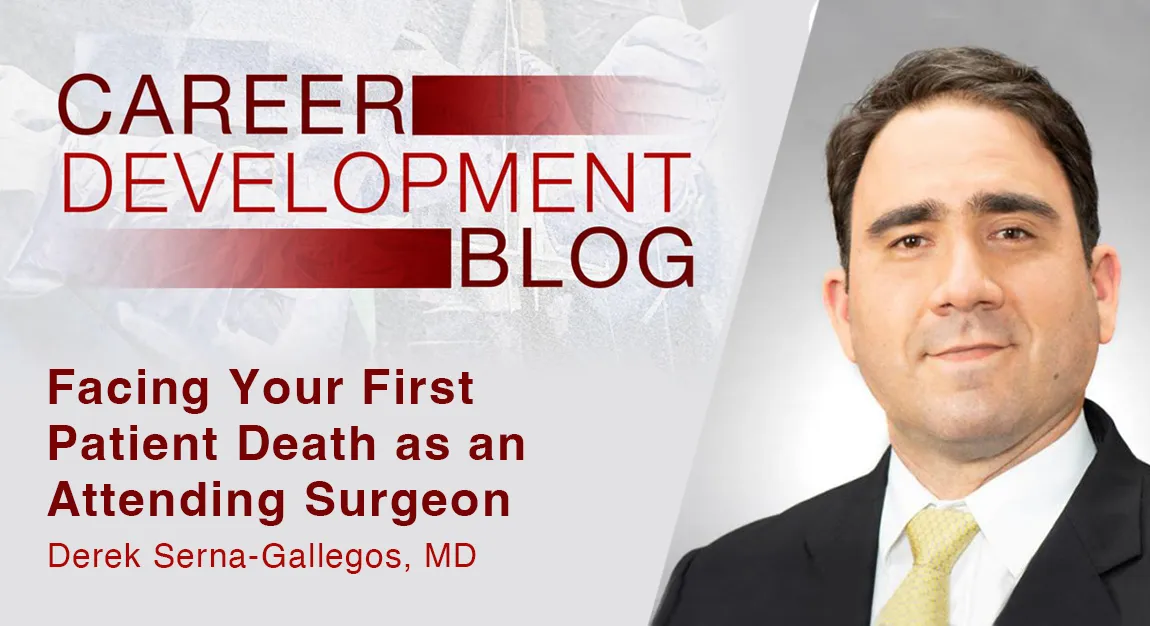
Patient loss is an inevitable part of cardiothoracic surgery, and while perfection is unattainable, surgeons must find peace in knowing they did everything possible to help their patients.
Every complication must serve as a learning opportunity, with surgeons reflecting personally and collaboratively to gain wisdom and improve patient care.
Open, honest communication with patients and families, before and after surgery, helps build trust, set realistic expectations, and ease the emotional toll when outcomes are difficult.
The occupation we have chosen is the most fulfilling job in the world. Cardiothoracic surgery has been the only career I have pursued as an adult, but I know that even without a meaningful comparison, my bold claim is correct. We have studied and practiced for years to acquire skills so that we can help to cure our patients or at least minimize their suffering. Rightfully so, society places us in high regard due to the sacrifices we make to our personal lives and our families so that we can help our patients.
We are compensated well for the sacrifices we make and for the years of training we have dedicated in our 20s and 30s in order to learn the skills to help heal patients. There are many great advantages to pursuing a career in cardiothoracic surgery, but all of the advantages that I have listed can be easily overshadowed by the death of a patient at our hands.
Throughout all of our careers, having a patient succumb to their disease, or our attempt at treating their disease, is as much of a certainty as our own eventual mortality. We witness patient deaths as medical students, residents, and fellows, but all of those experiences do little to prepare us for a patient death as an attending surgeon. My goal here is not to try to prepare you for your first patient death but to outline a few things that will help you to find closure and move forward as a wiser, more experienced, and balanced surgeon ready to care for the next patient that finds themselves on your operating room table.
It WILL happen
As I mentioned before, it is inevitable that when we care for patients with cardiothoracic diseases, there will be patients who will die under our care. Accepting this fact is part of our reality as cardiothoracic surgeons, but it does not mean that it is not emotionally taxing. We hold ourselves to the impossible standard that no patient should die under our care, knowing that perfection is unattainable. Understanding the reality of our profession is what drives us to try to be the best physicians and surgeons in every way we can. Put in the time reading, practicing, reviewing charts, and perfecting your technical skills so that when a death occurs, you can rest assured you did everything humanly possible to try to prevent the death from happening.
No patient death can be in vain; we must learn something from every complication
We must begin the process of learning from complications both after the fact as well as while they are happening. Search out mentors before taking on a difficult case and take advantage of their past experiences in an effort to avoid complications that have happened before. We must view ourselves not as individual surgeons with individual knowledge bases and experiences, but as a conglomerate of shared knowledge so that not every surgeon has to make the same mistakes to gain knowledge and wisdom. Doing your due diligence to learn from others' experiences before undertaking an operation should be considered just as important as knowing all the relevant details of the patient's conditions and past medical history. After a death or a complication, it is imperative to spend time reflecting on how things could have been done differently and possibly led to a different outcome. This reflection is a personal exercise, but should also be a shared experience with clinical partners and mentors.
Communication with the patient and their family is key
Since crystal balls don’t exist (the STS risk calculator does its best), we cannot accurately predict when a patient's death will occur, and this is why it is so important that communication about the operation and its potential pitfalls occurs early and often in an open manner with the patient and their family. Patients and their families are generally not able to comprehend the risks and possible outcomes of the operations, and so it is our responsibility to give our best effort to help patients and families to understand and to make a decision with which they are comfortable. Often discussing complications like stroke, death, renal failure, and respiratory failure in the preoperative setting can lessen the emotional weight of encountering these complications in the postoperative setting.
There is no real way to prepare for a patient's death
This article was initially designed to discuss the first death of an attending cardiothoracic surgeon, but the truth is that it does not become easier with time. Mentors of mine who have more years of experience have confirmed this truth. The ideas I have outlined are what give me solace in these difficult times. Knowing that I have carefully communicated with my patients and their families, given my best effort, tapped into the knowledge and wisdom of my entire community of cardiac surgeons, and learned from every complication that occurs is what gives me the enthusiasm to continue to pursue the greatest career that has ever existed, even in the face of a patient's death.