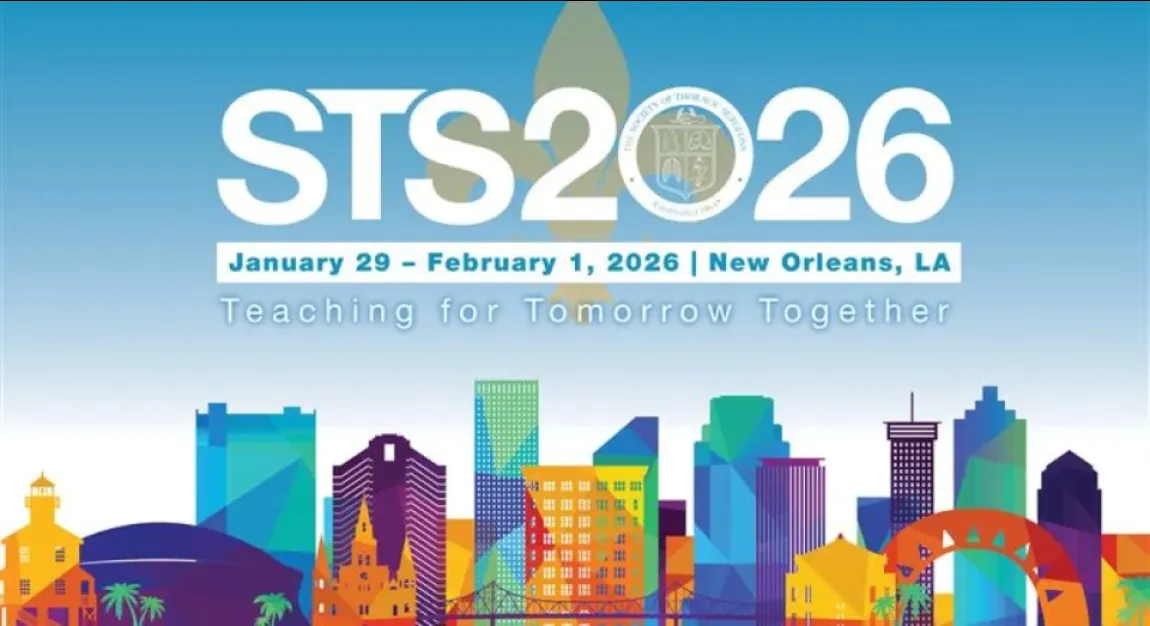
The Richard E. Clark Memorial Paper on day one of STS 2026, Optimal Management for Moderate Aortic Stenosis at the Time of Coronary Artery Bypass Grafting, will be featured during the “Optimizing AVR: Aiming for Perfection” session on Thursday, Jan. 29, at 11:00 a.m. In this presentation, Pey-Jen Yu, MD, of Northwell Health, will explore how best to manage moderate aortic stenosis (AS) in patients undergoing coronary artery bypass grafting (CABG), a question that has grown increasingly important as transcatheter approaches continue to reshape treatment pathways.

Drawing from a large cohort in the Society of Thoracic Surgeons Adult Cardiac Surgery Database (ACSD), linked with national inpatient records, Dr. Yu and colleagues compared outcomes for patients who had isolated CABG versus those who received CABG combined with aortic valve replacement (AVR). The goal was to understand both the immediate risks and the longer-term implications of addressing—or deferring—valve intervention in patients with moderate AS.
The study found that patients undergoing CABG alone experienced slightly lower operative risk, but they were more likely to require later aortic valve intervention and were at increased risk for readmission related to heart failure. Meanwhile, those who underwent concomitant AVR faced a higher initial risk but significantly lower likelihood of needing future valve procedures. Importantly, mid-term survival was similar between the two groups.
In her presentation, Dr. Yu will highlight how the rapid expansion of transcatheter valve therapies served as a key motivation for this work, prompting the team to revisit longstanding assumptions about when to intervene on a moderately stenotic valve during open-heart surgery.